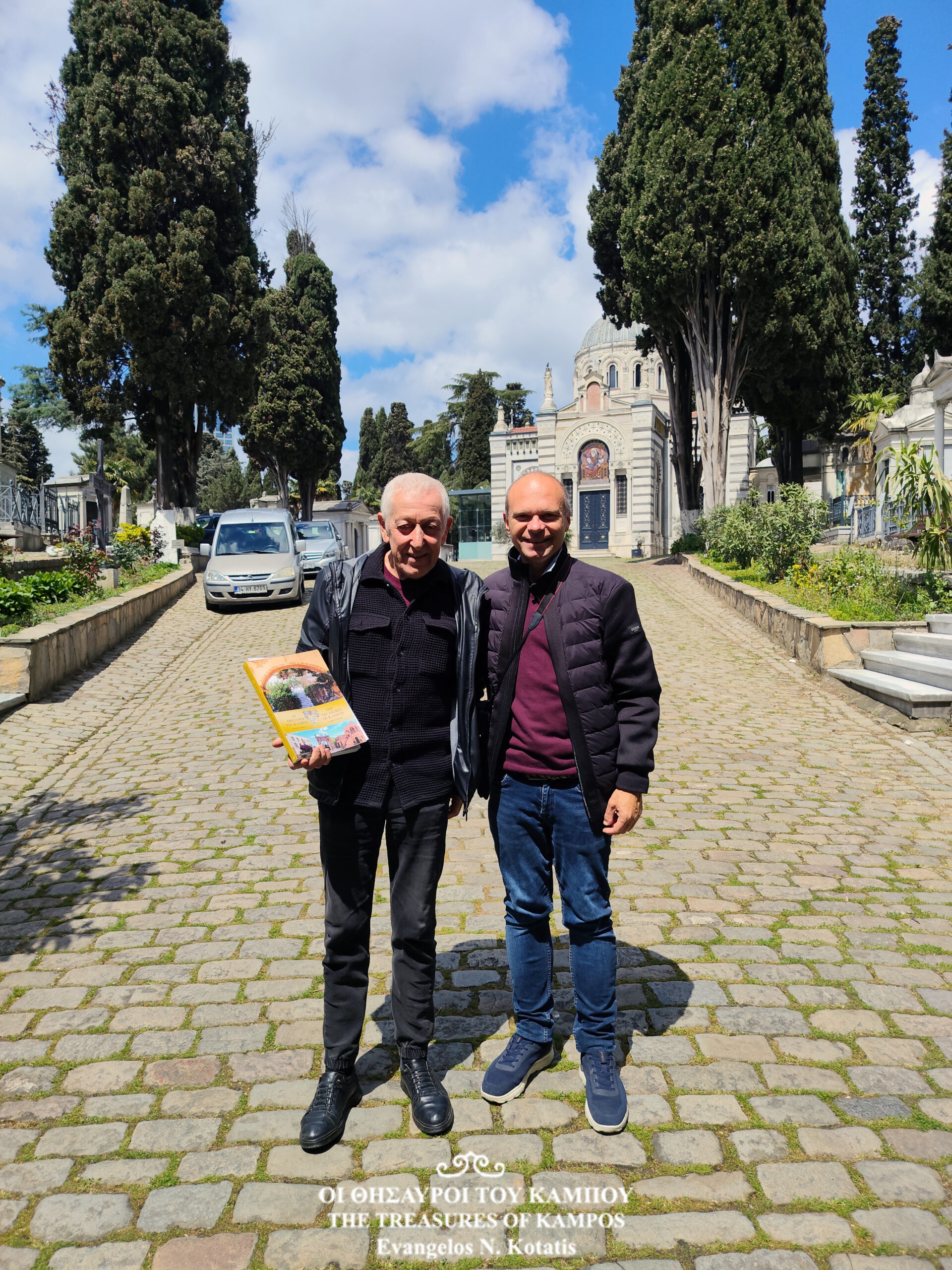
As part of my on-site field research in Constantinople, I visited the Sisli Greek Orthodox Cemetery—a profound site where memory converges with high art. During my visit, I had the privilege of meeting with the Director, Mr. Manolis Segisoglou, of the cemetery and presenting him with a copy of my book, “The Treasures of Kampos.”
Sisli stands as a true open-air museum of architecture and sculpture, showcasing a magnificent blend of Western-style and classical Greek structures. The cemetery was relocated to this site from the Taksim area around 1865, spanning an impressive area of 38,600 square meters. It serves as the final resting place for the grand, monumental mausoleums and family tombs of the prominent Chian aristocracy of the City (such as the Rodocanachi, Scaramanga, Schilizzi, Mavrocordato, and Psycharis families).
From an architectural and material perspective, the cemetery is of immense cultural value:
- Materials & Sculpture: The monuments predominantly feature exquisite white Carrara and Pentelic marble, masterfully crafted by leading Greek and European sculptors of the era (including the renowned Tinian sculptor Ioannis Chalepas and the Vitalis brothers), turning the tombs into remarkable masterpieces of high-relief art.
- The Central Church of the Transfiguration of the Saviour: The imposing, Eclectic style, cross-in-square church with a central dome was erected through the grand donation of the brothers Dimitrios, Ioannis, and Pavlos Stefanovik-Schilizzi, in loving memory of their parents, Zannis and Eleni (designed by architect Domenico Pulgher and consecrated in 1888).
The study of these funerary monuments is vital to my ongoing research. The very same families who financed, built, and shaped the historic estates and mansions of Kampos in Chios left their indelible architectural mark here as well, sealing the shared aesthetic values and historical destiny of the Chian diaspora.