
THE TREASURES OF KAMPOS
Through the Testimony of its Inhabitants, is an original research examining the architecture of Kampos, the aristocratic suburb of Chios, where the Chiot-Genoese noblesse had built their summer resorts. The excellence of the Kampos ensemble and its unique character still echos memories of illustrious lineages, which created their beautiful palaces, lived and acted here, making this area a marvel for the years to come.
Bilingual Greek – English
Author: Evangelos N. Kotatis
Publisher: Alfa Pi
Publication year: 2017
Publication place: Chios, Greece
Pages: 216
ISBN: 978-618-5117-78-8
THIS BOOK WAS FUNDED COURTESY OF PETER H. GAMBRANIS

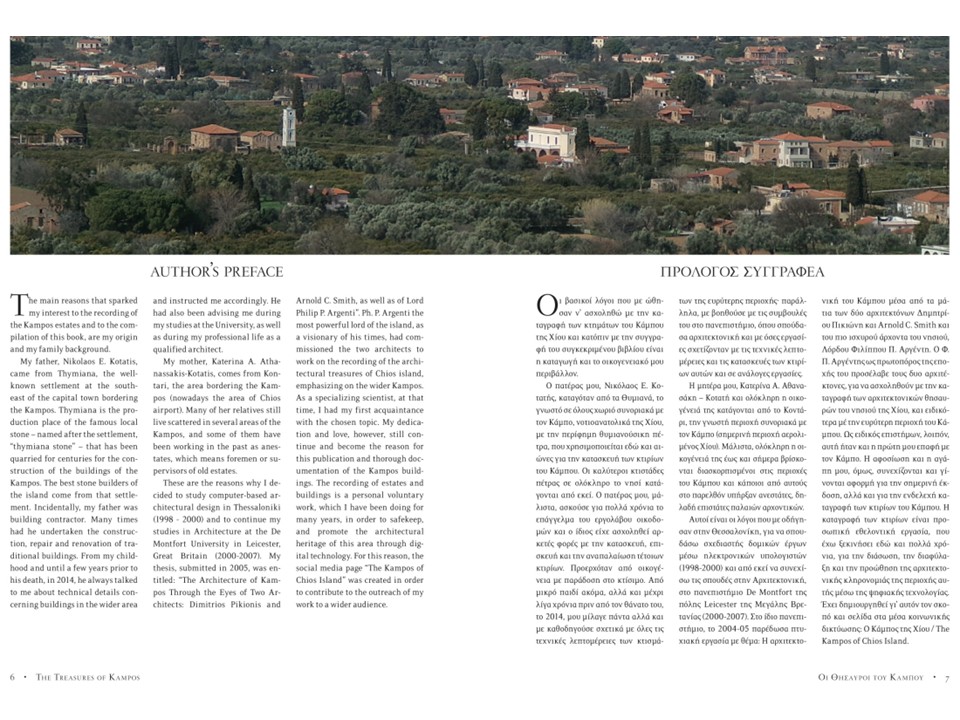
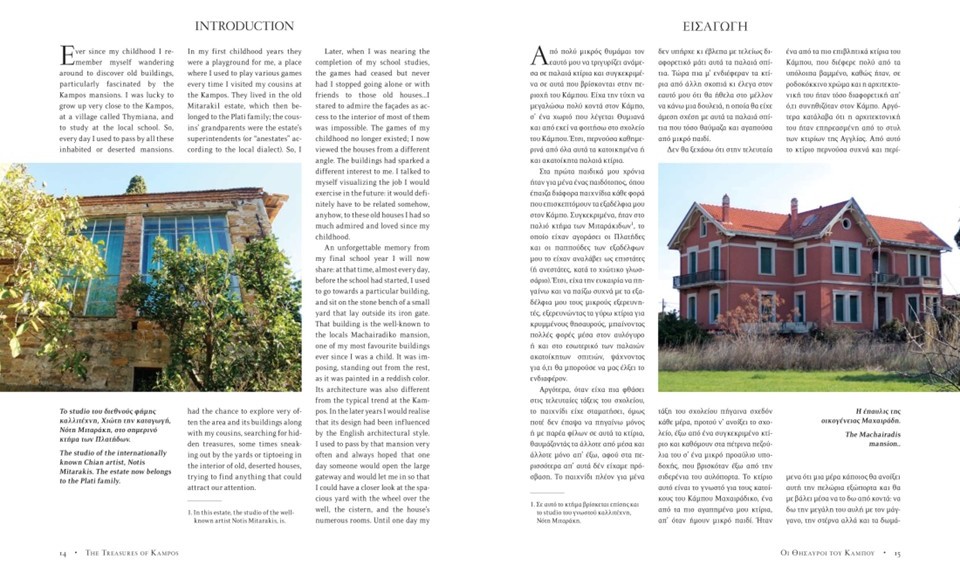
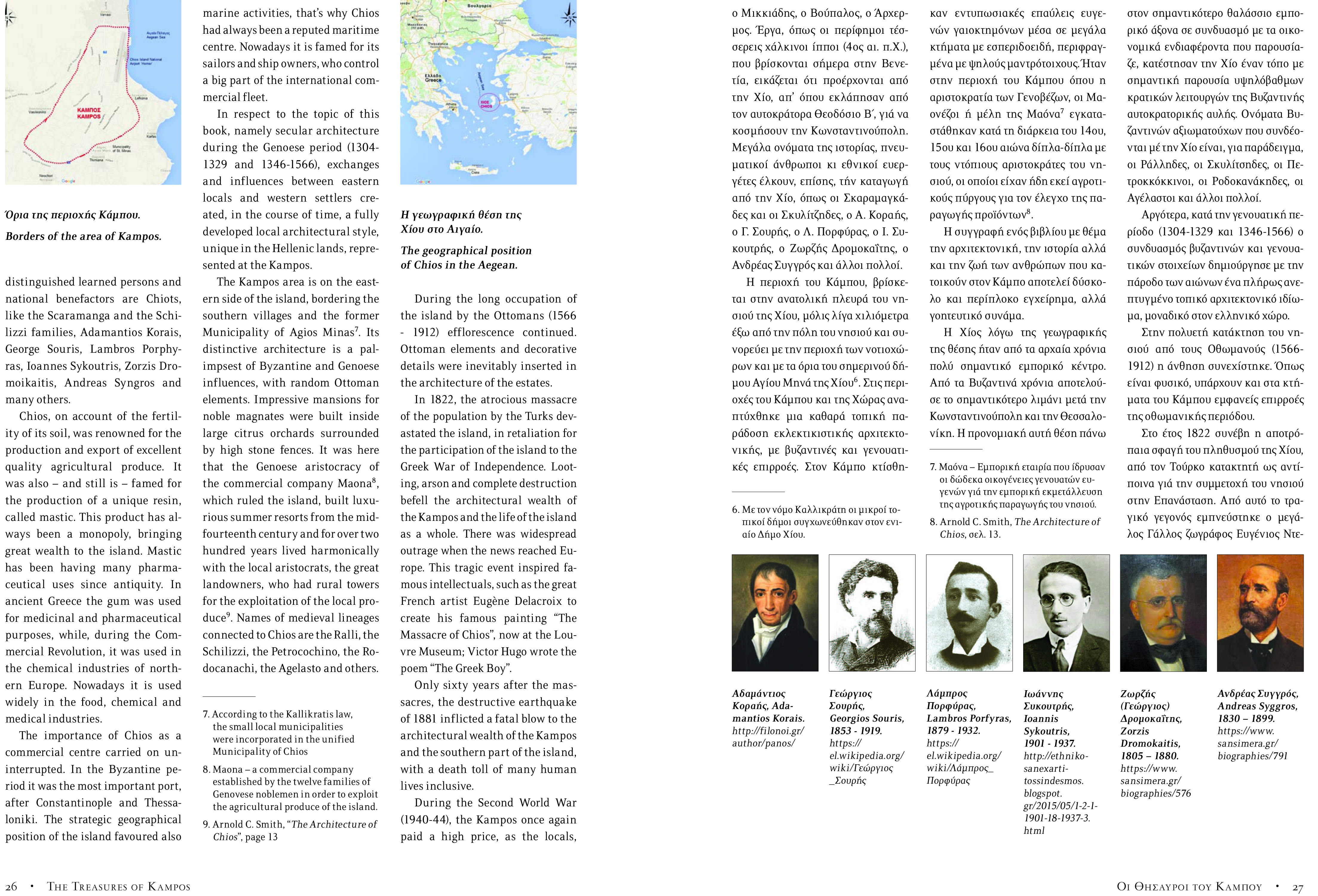
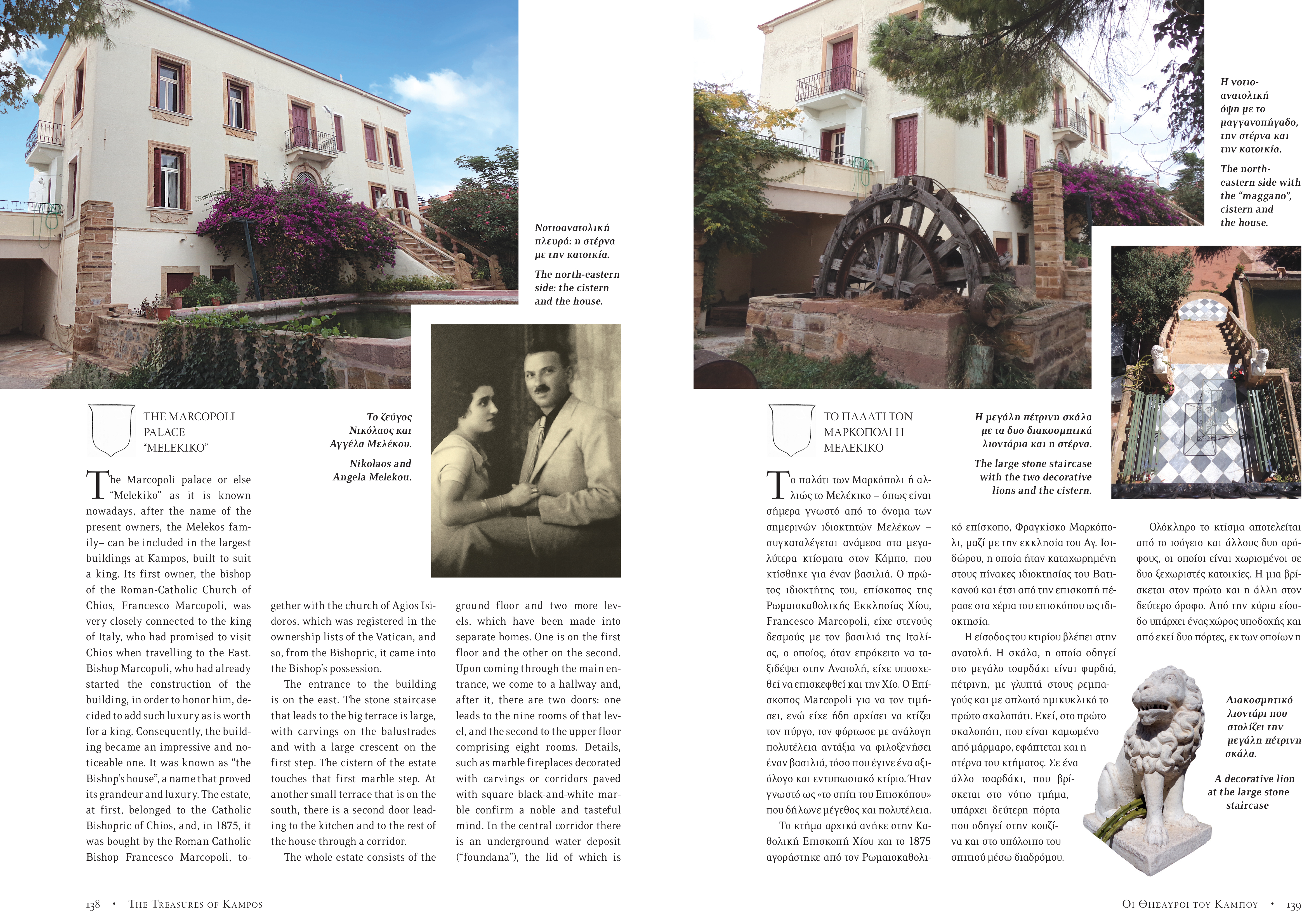
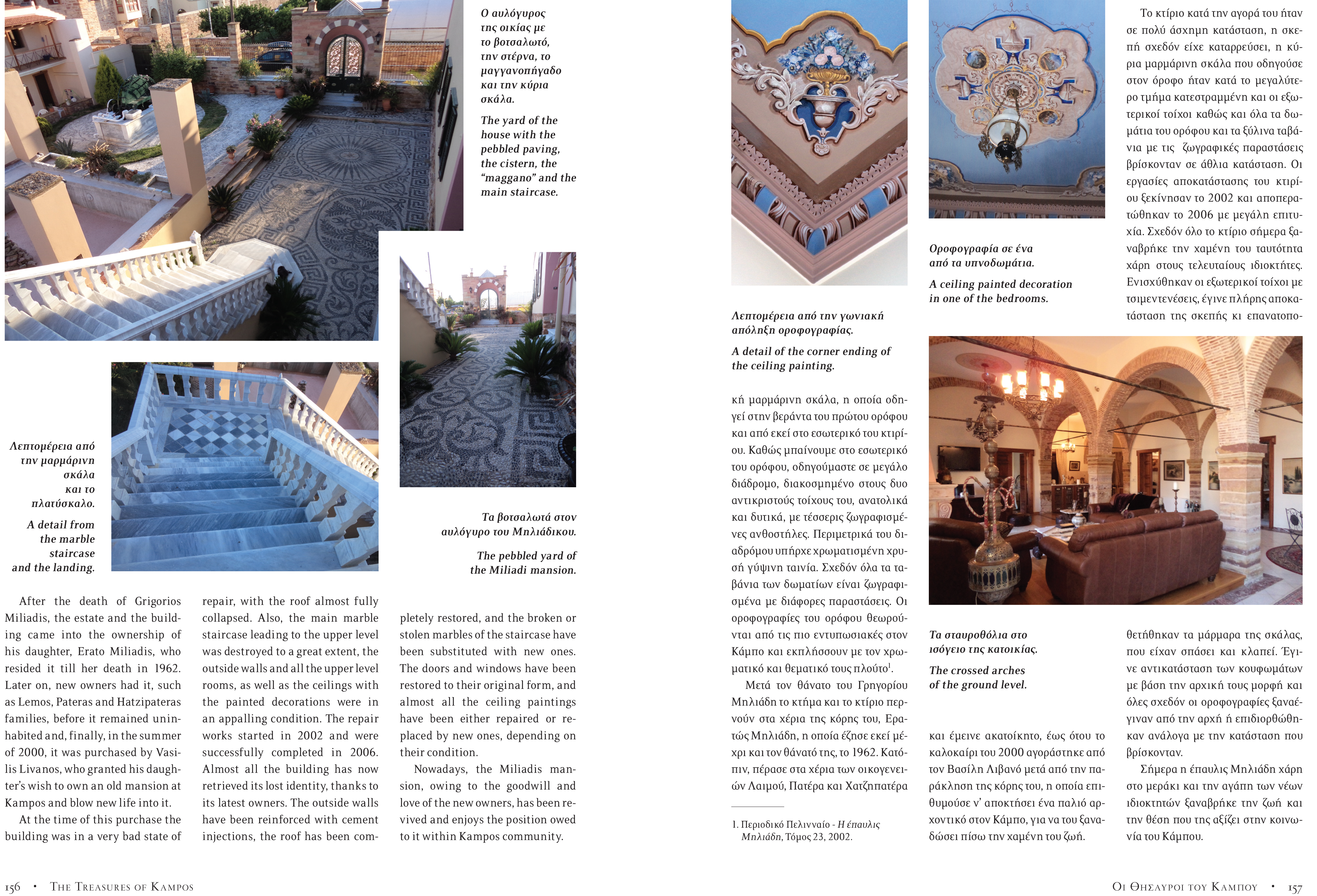
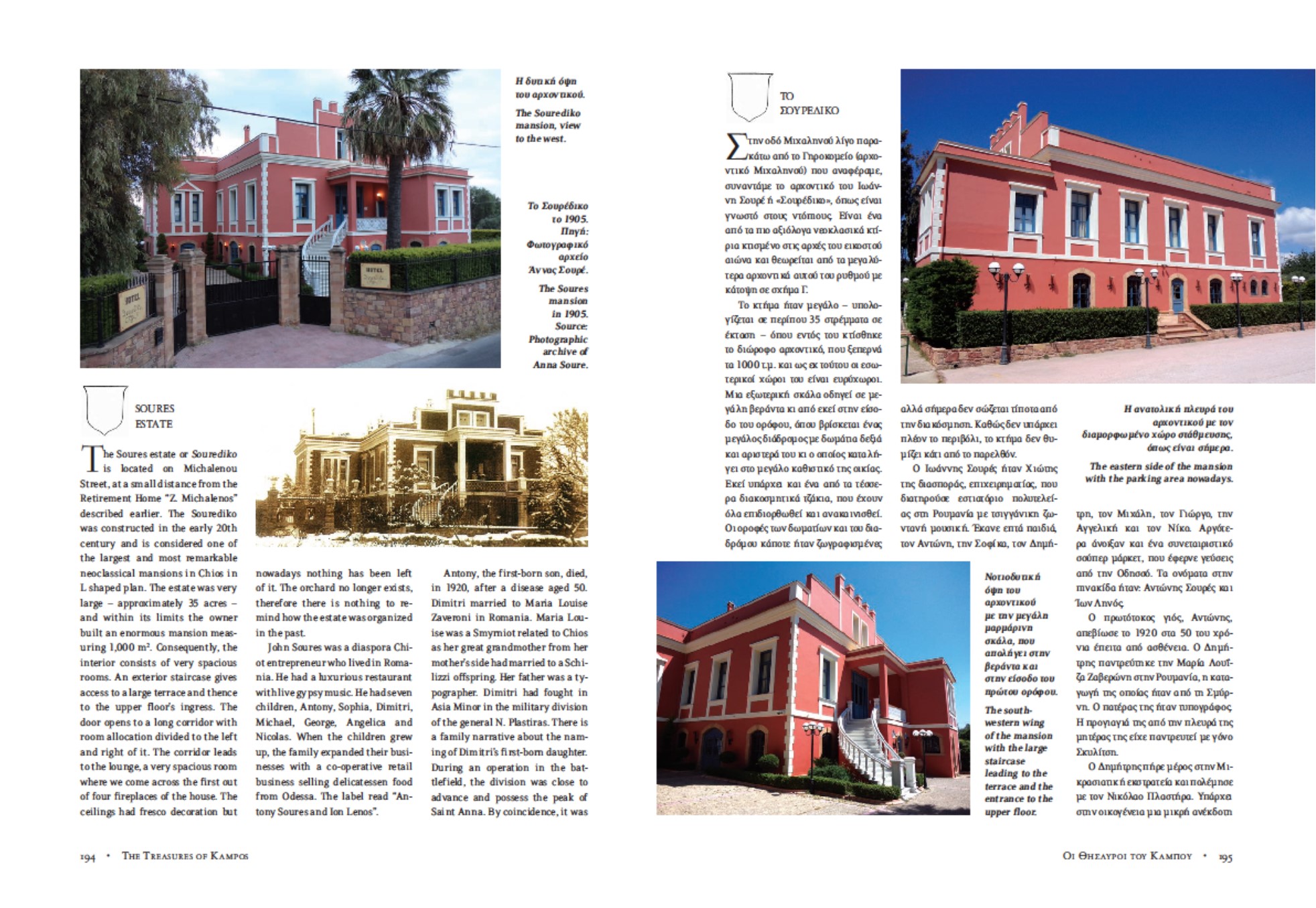
The present book is dedicated to the memory of my father, NIKOLAOS EV. KOTATIS (†2014) and to my mother, AIKATERINI ANT. ATHANASSAKIS – KOTATIS, who made me realize by merely being simple the importance of education and culture. They have always been a source of inspiration, a good example, and my guardian angels not only during my studies but also in my life afterwards, supporting me financially and emotionally.
Foreword
This book stems originally from a dissertation that Evangelos N. Kotati wrote at De Montfort University, Leicester, England. Teaching there at the time, I was fortunate to have Evangelos in my architectural history classes. It is extremely gratifying to see that his work has blossomed into this excellent study. The author aims to reach a wider readership by publishing the text in both his native Greek and his adopted language, English.
The many buildings recorded and discussed here were brought about by a series of occupations a variety of architectural influences, notably Byzantine, Ottoman, Genoese, Venetian. Most striking, are the monuments in the Kampos area of Chios, where the rich and the nobility built their “palaces”.
This book is beautifully illustrated, showing a substantial number of the surviving buildings with great sensitivity to their history. The author feels deeply about his heritage on this island, and his aim is to see the decay halted and the remaining buildings conserved for posterity. This is important for not only the island but also for Greece and the rest of the world, as such buildings are now being lost forever. Future generations should be able to look upon their inheritance with pride and as an inspiration.
Reading this manuscript has been a pleasure as well as an education, and I am touched and delighted to have been invited to write this preface.
Adam Hardy
Professor of Architecture
Welsh School of Architecture
Cardiff University
Wales – UK
The present book is characterized by the sincere enthusiasm of a young architect for the architectural complexes and the monuments surrounding the wider area, where my dear colleague, Evangelos Kotatis, lives. The core of the book was formerly a university thesis, which has now evolved into an enhanced research tackling folk-lore, architecture and the history of our place of origin. Evangelos treats his topic with passion, and sensitivity, preoccupation, and persistence, thus making the reader part of the life of the Kampos. The architectural treasures presented here contain precious information accompanied by beautiful images.
Evangelos aims to highlight the bond linking the buildings with the identity of their successive owners: he does this by means of a journey through time, where the reader is able to meet virtually the creators of those edifices, the occupants who resided in them, and who, in the course of time, refurbished them adapting or changing their use according to arising needs. Thus, the monuments presented here are envisaged both as architectural entities as well as living organisms encompassing the lives and actions of their successive occupants. Texts and photographic documentation show Evangelos’ determination to fight against the inevitable decay, by illustrating one of the most beautiful architectural contexts of modern Hellenism.
Our wish is that this book will become a source of knowledge, the means that will lead to respect, responsibility and protection of our cultural heritage. Let the invaluable testimony of our history lead us to acknowledge our identity and promote our culture.
Anna Fikari
Architect – Engineer
Chairman of the Architects’ Union on Chios
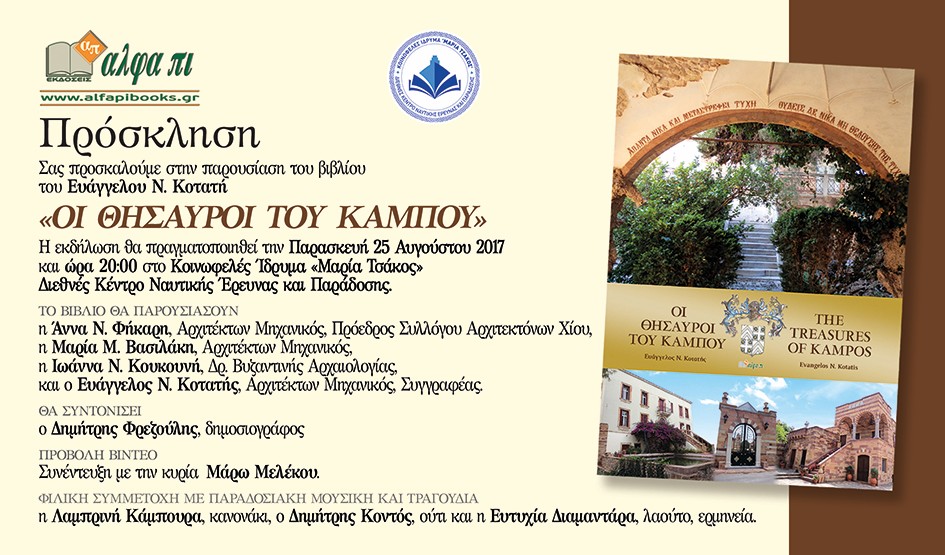
Book Presentation
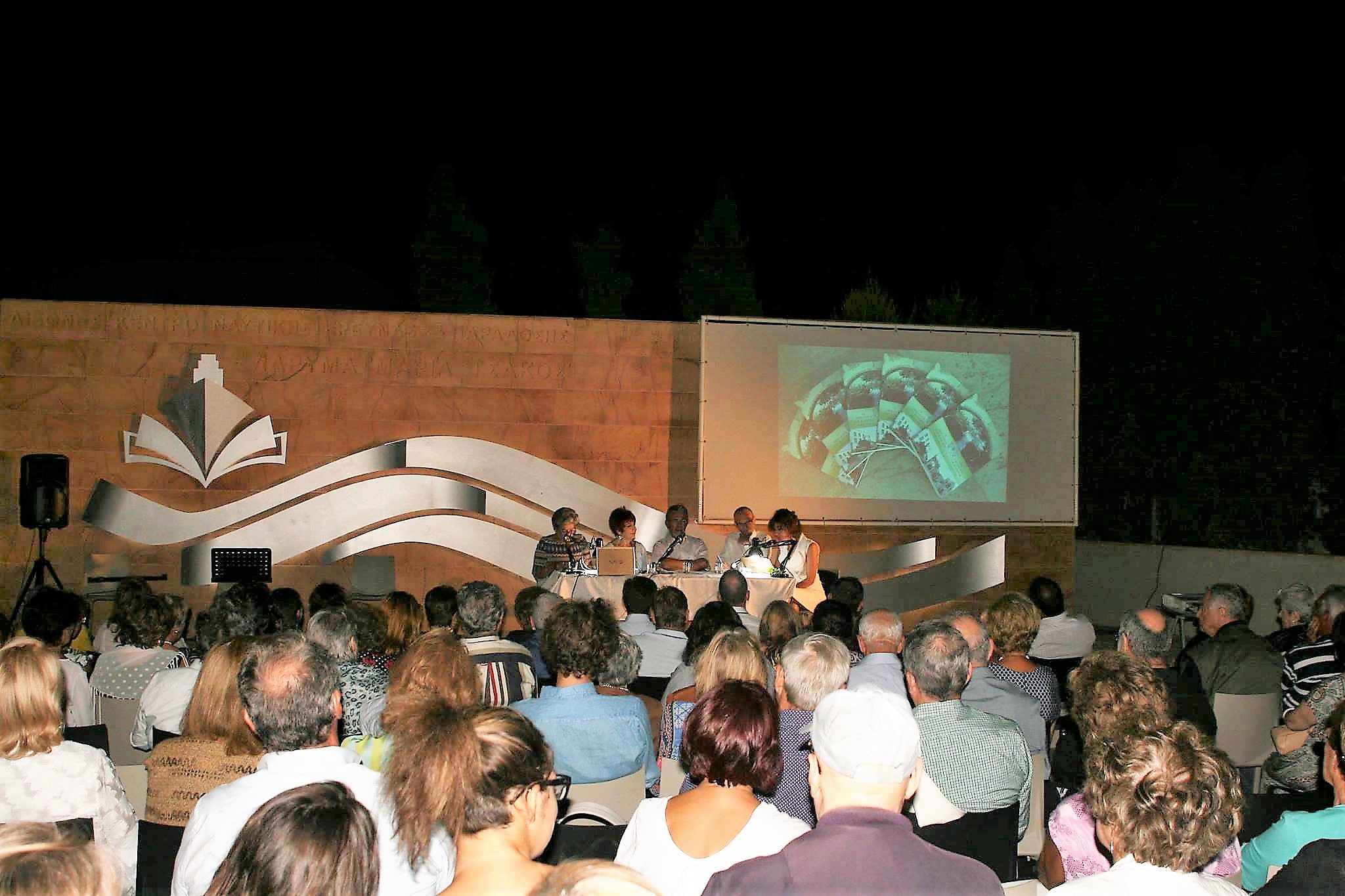
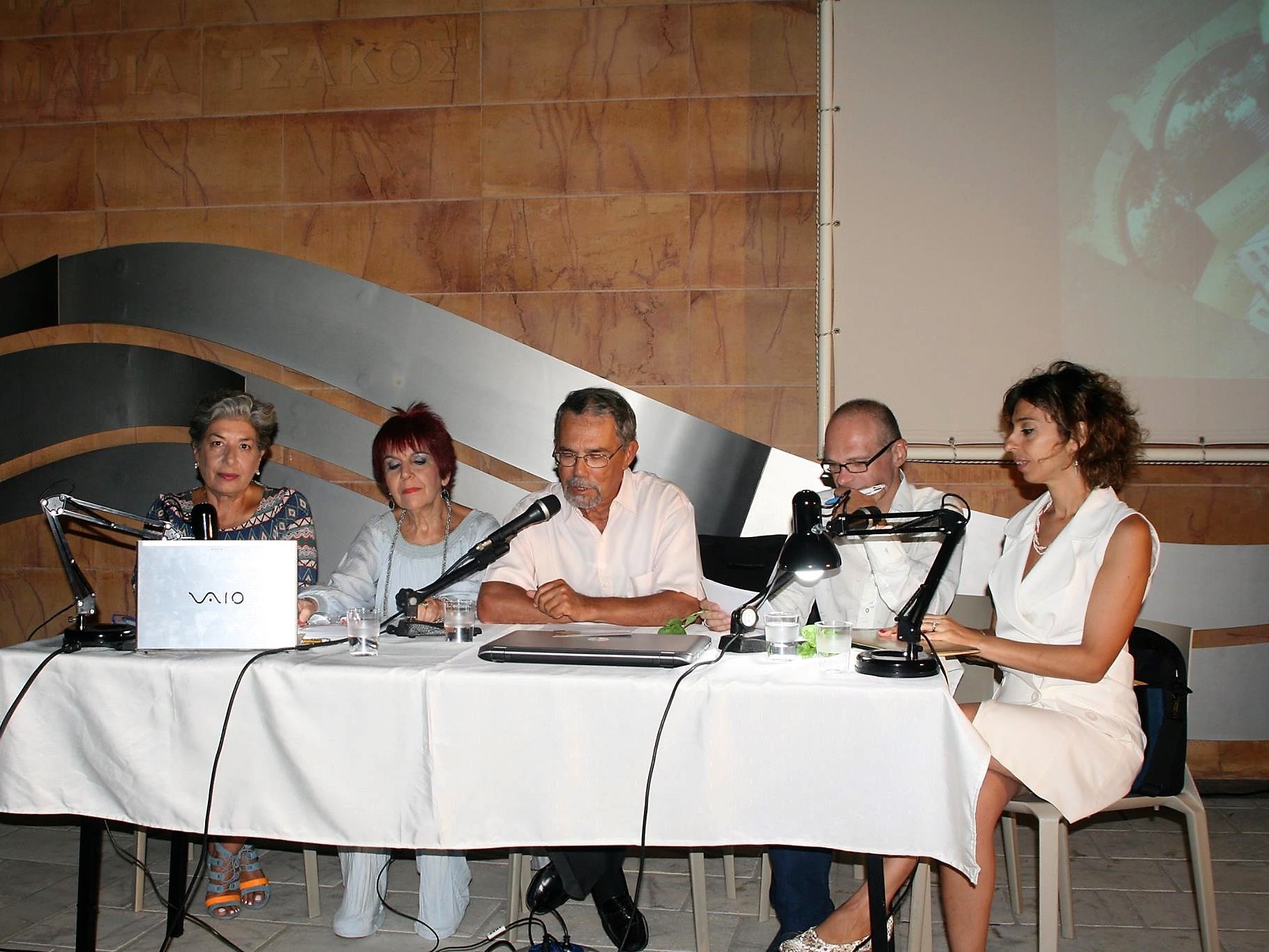
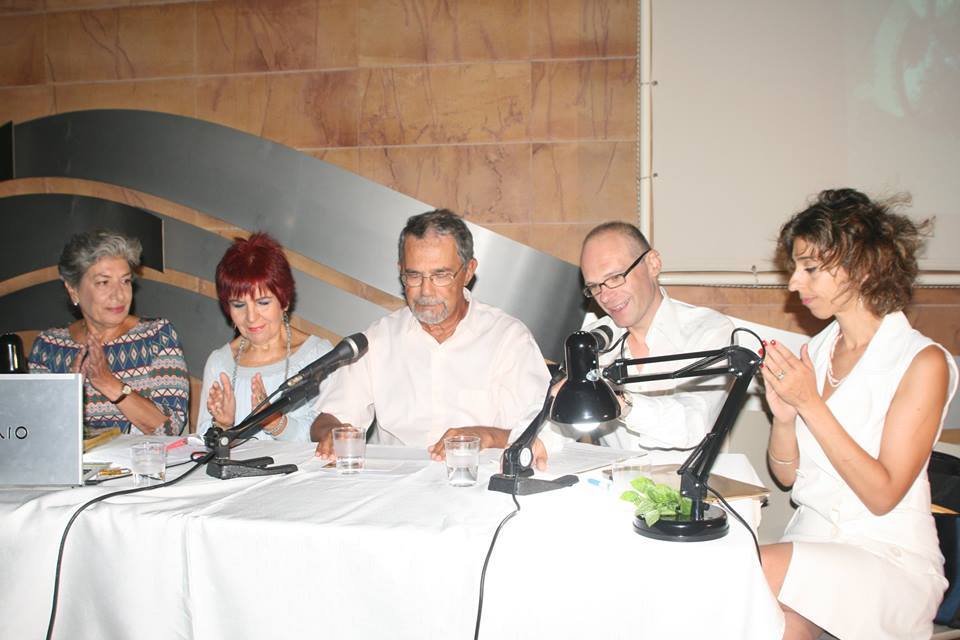
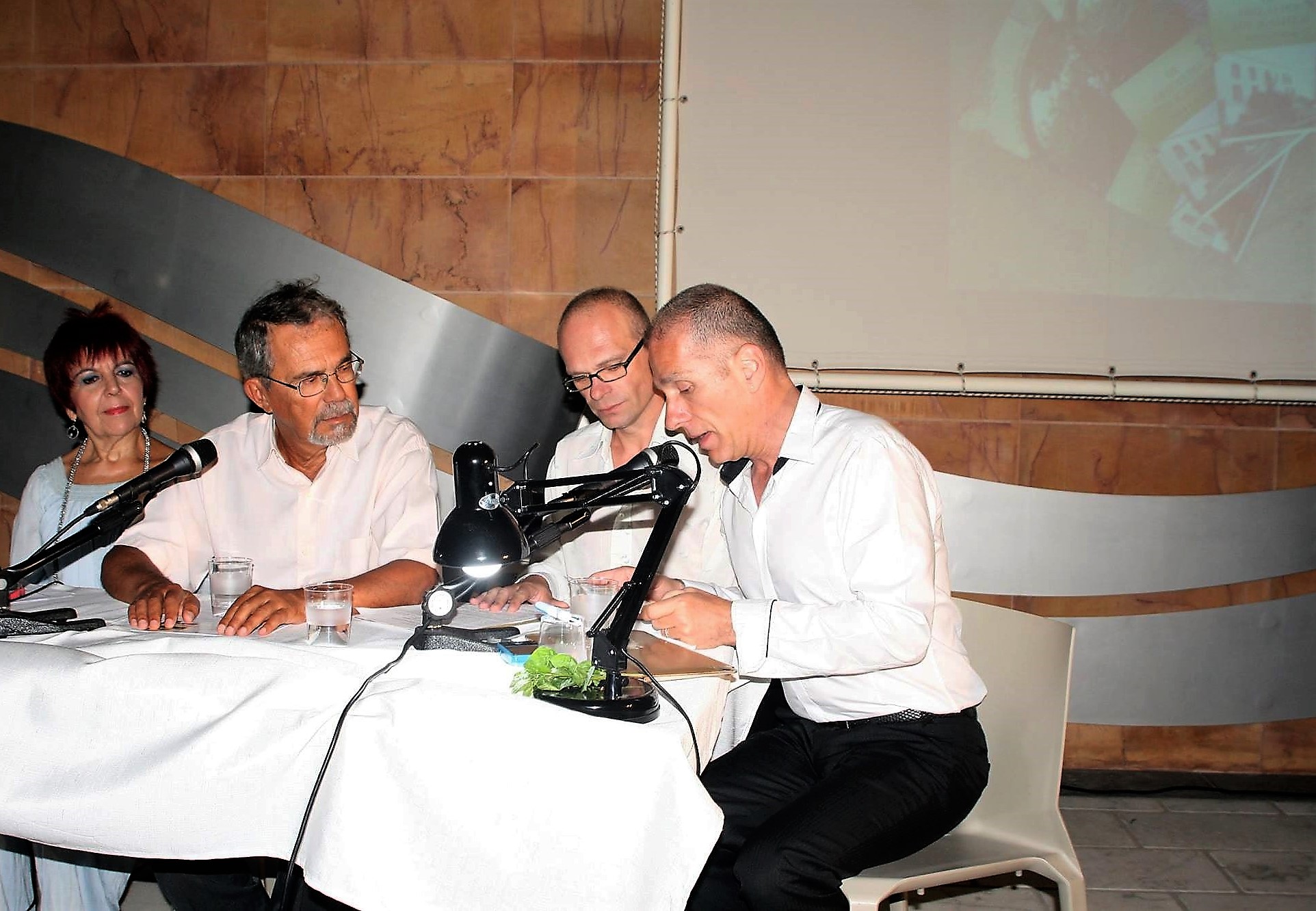
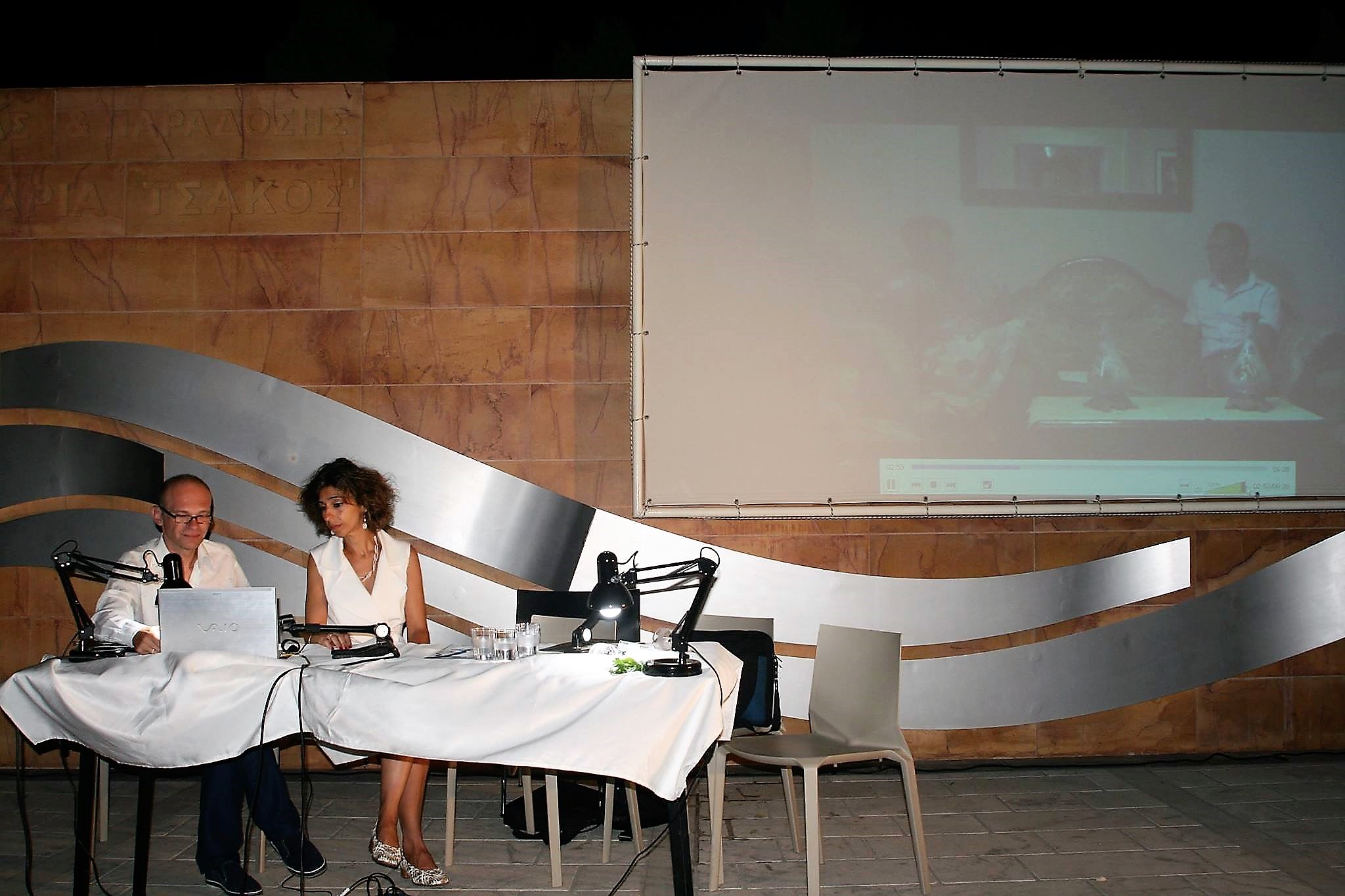
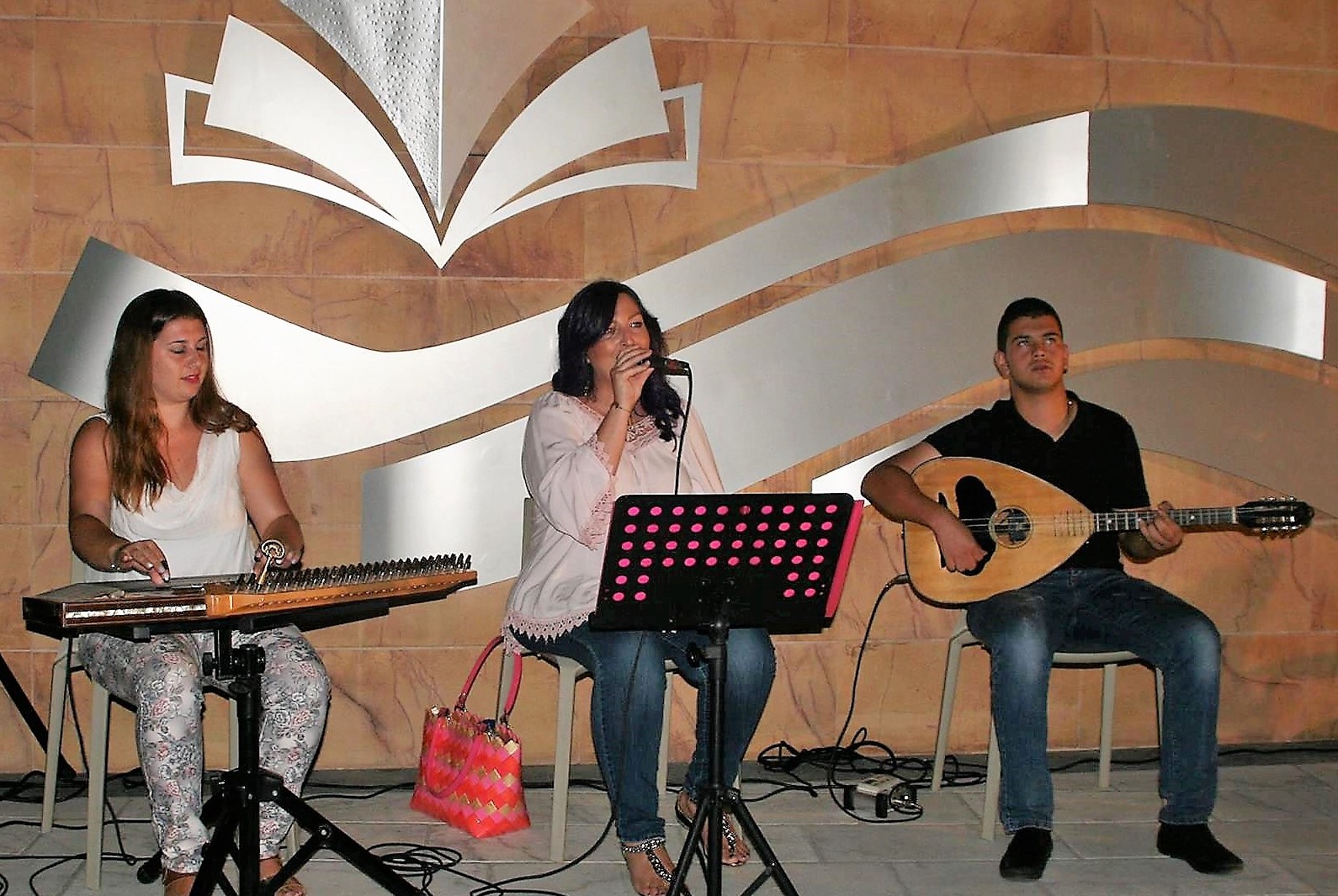
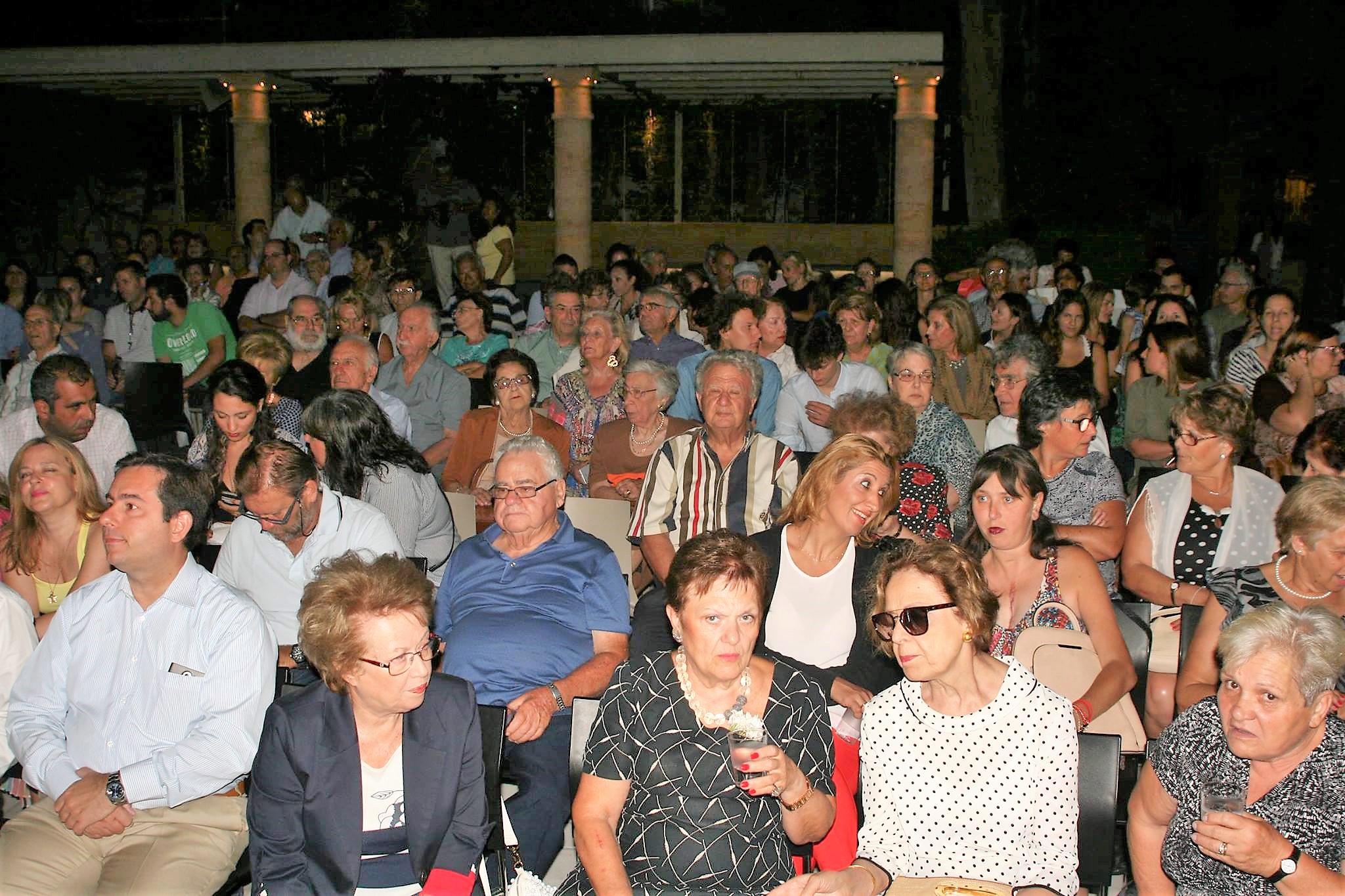
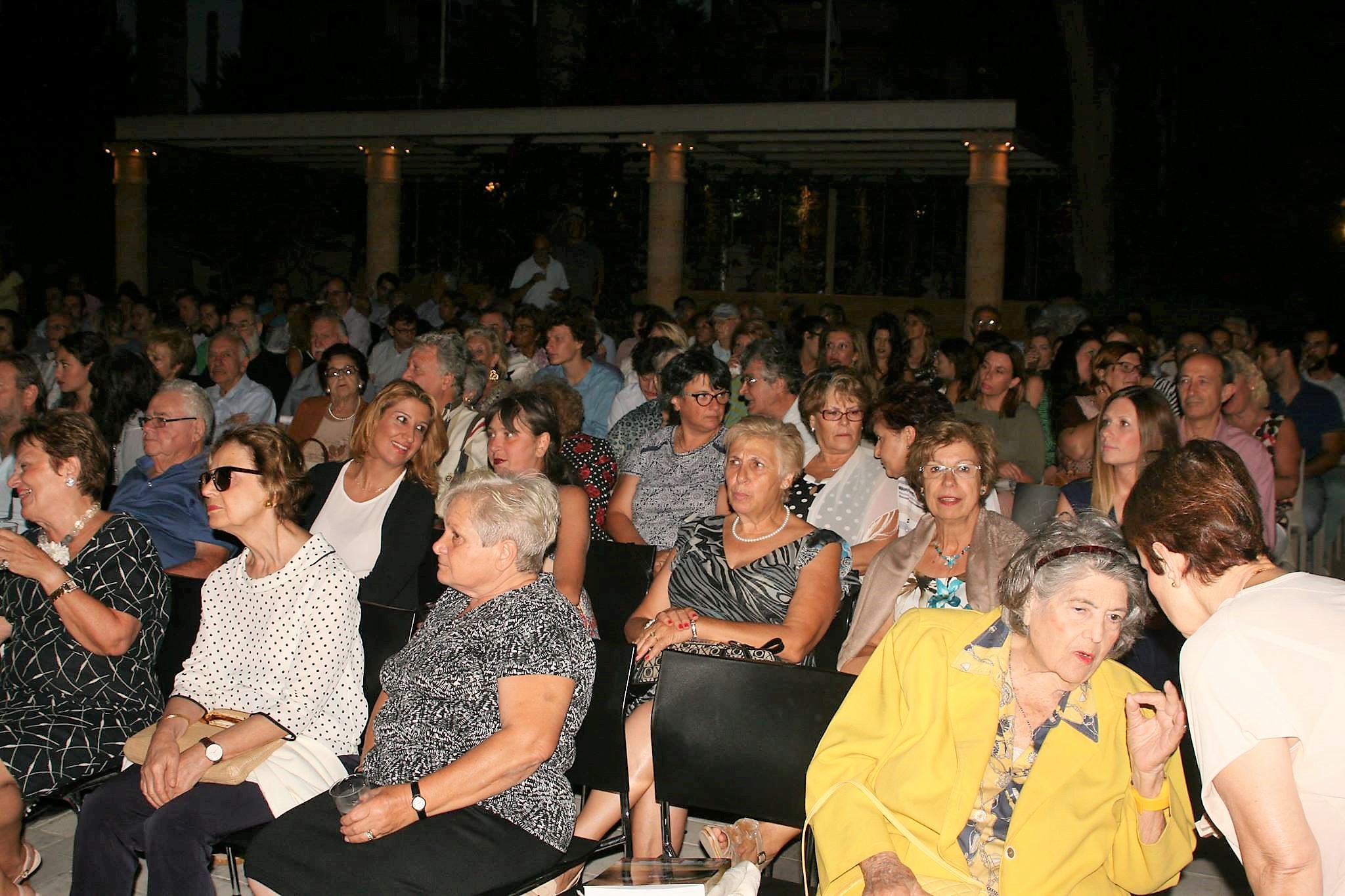
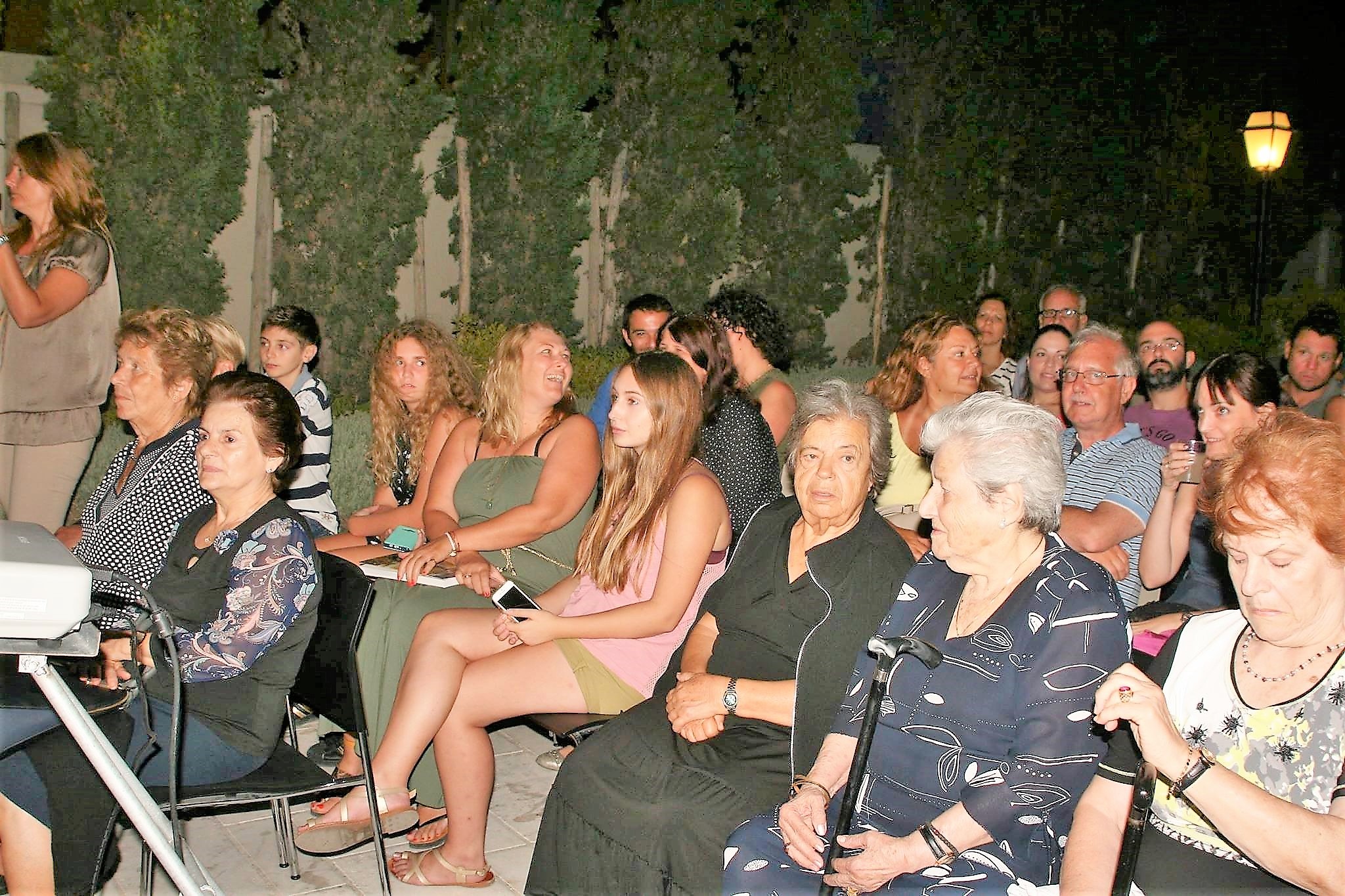
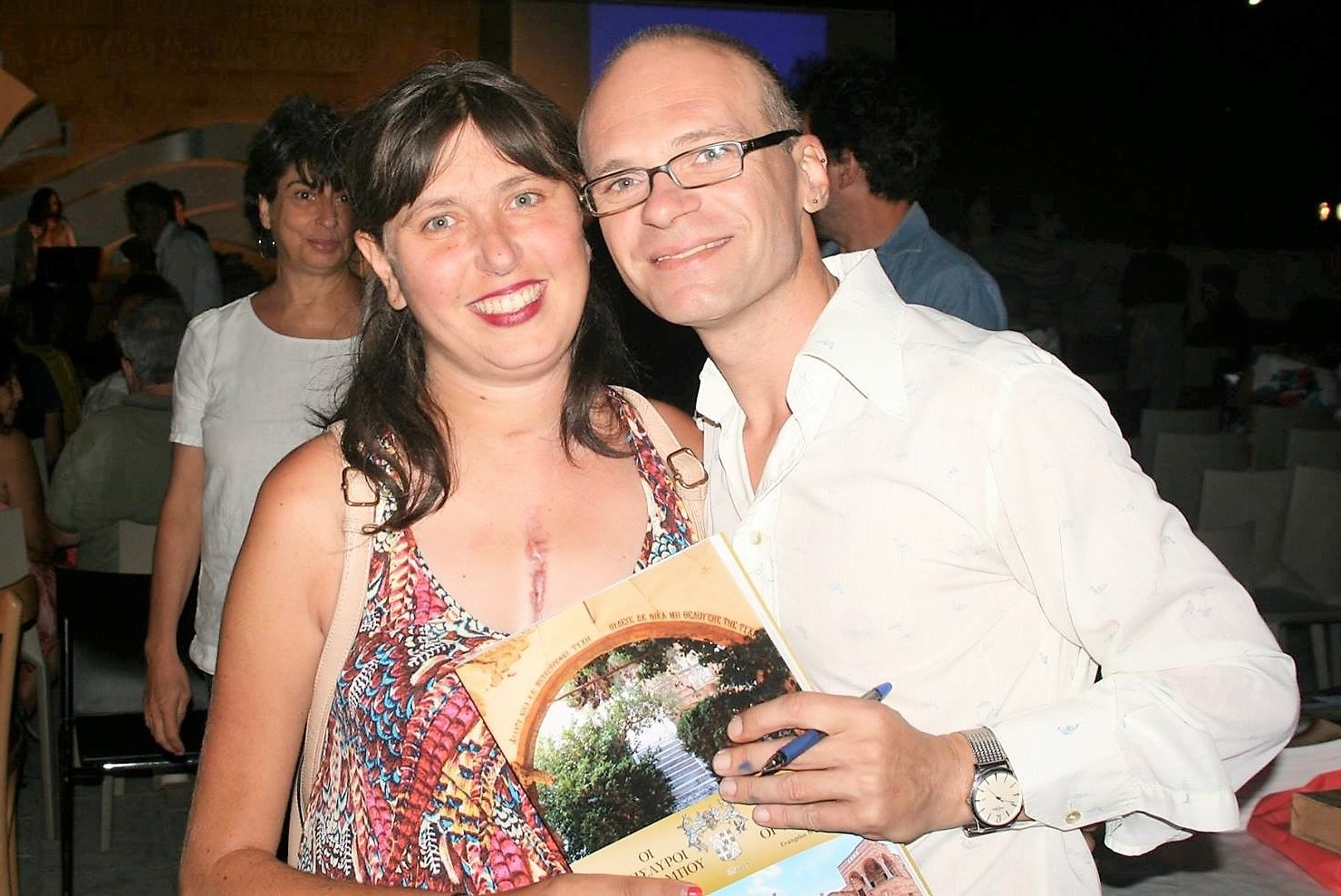
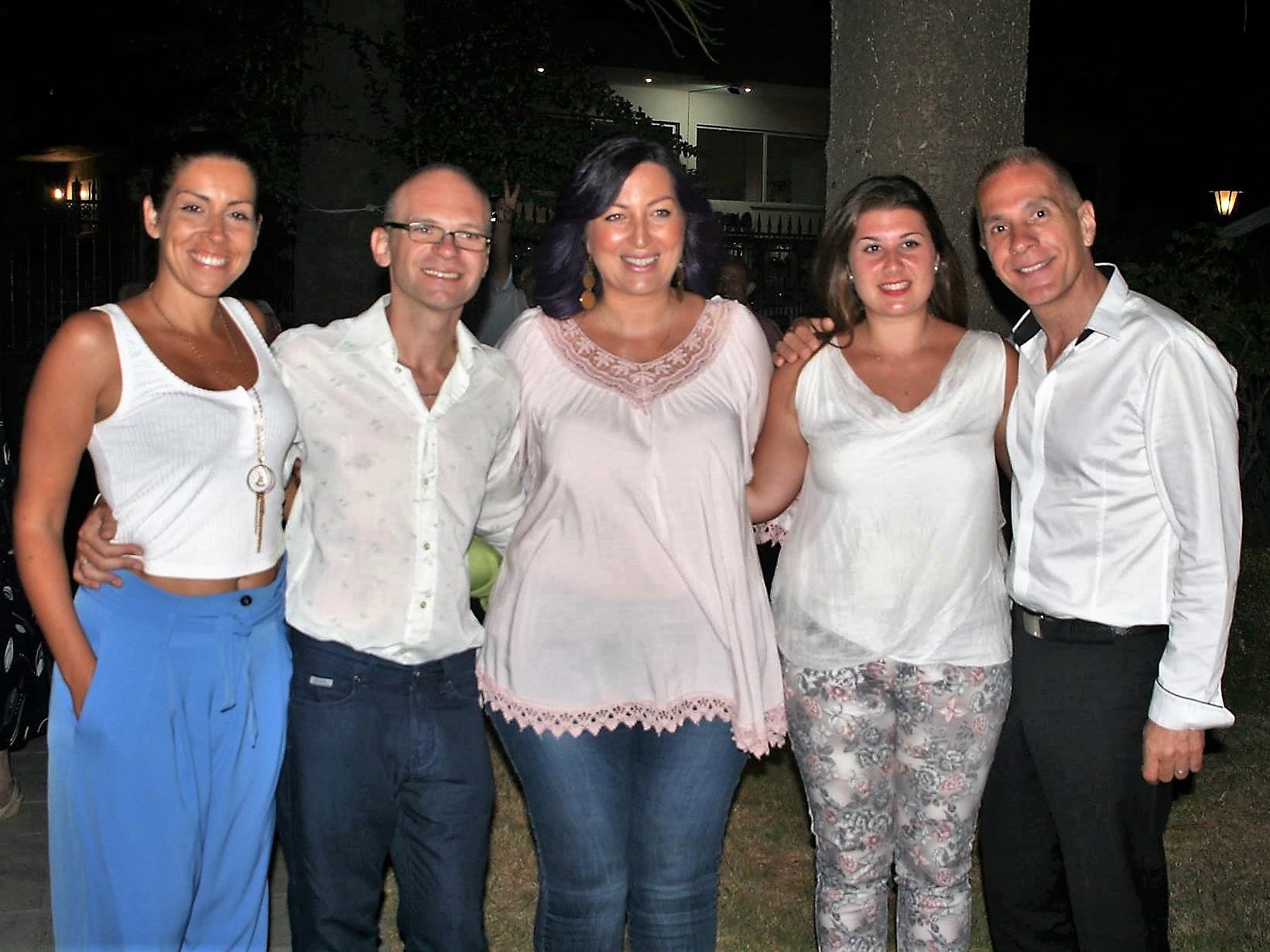
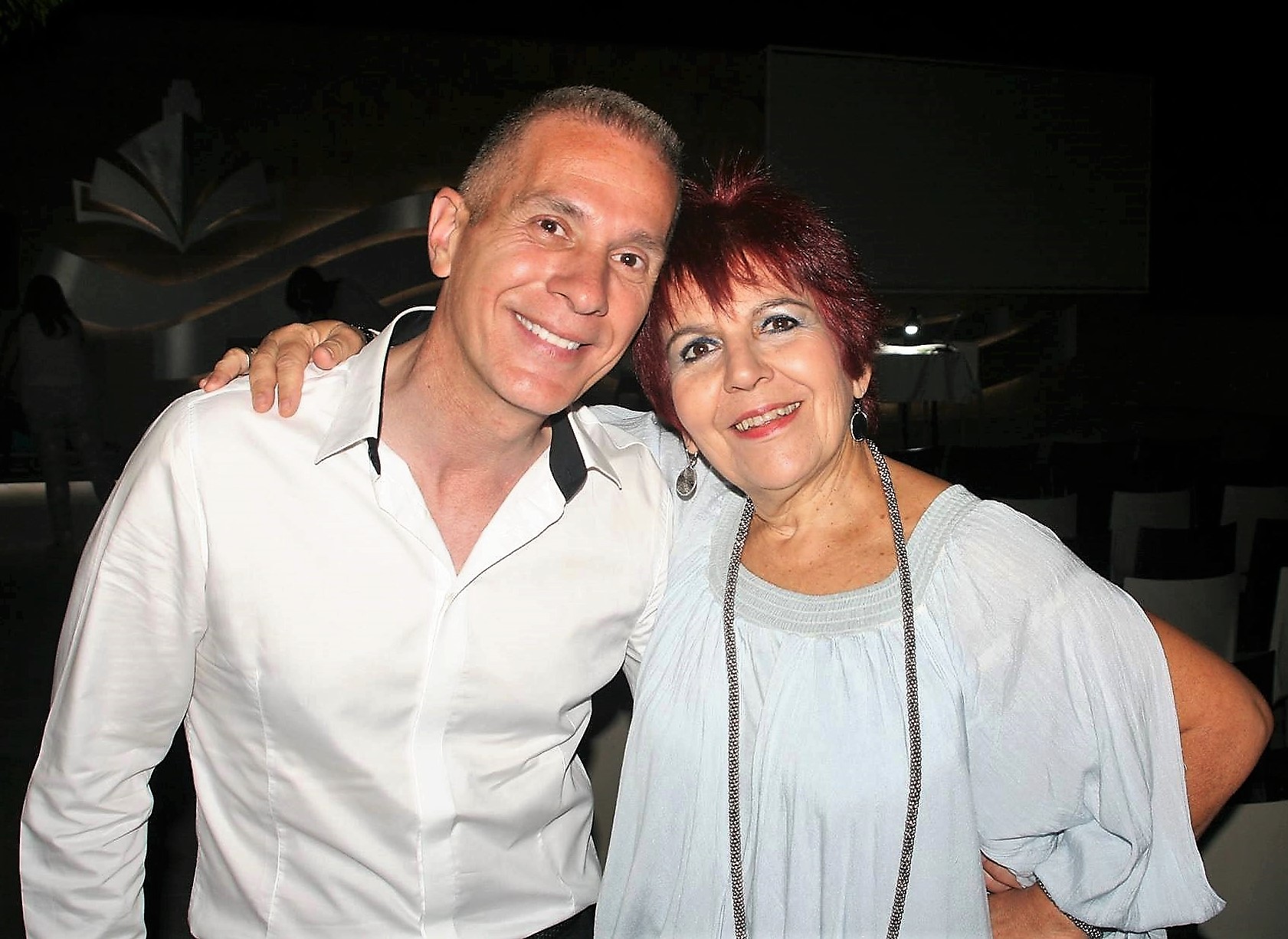
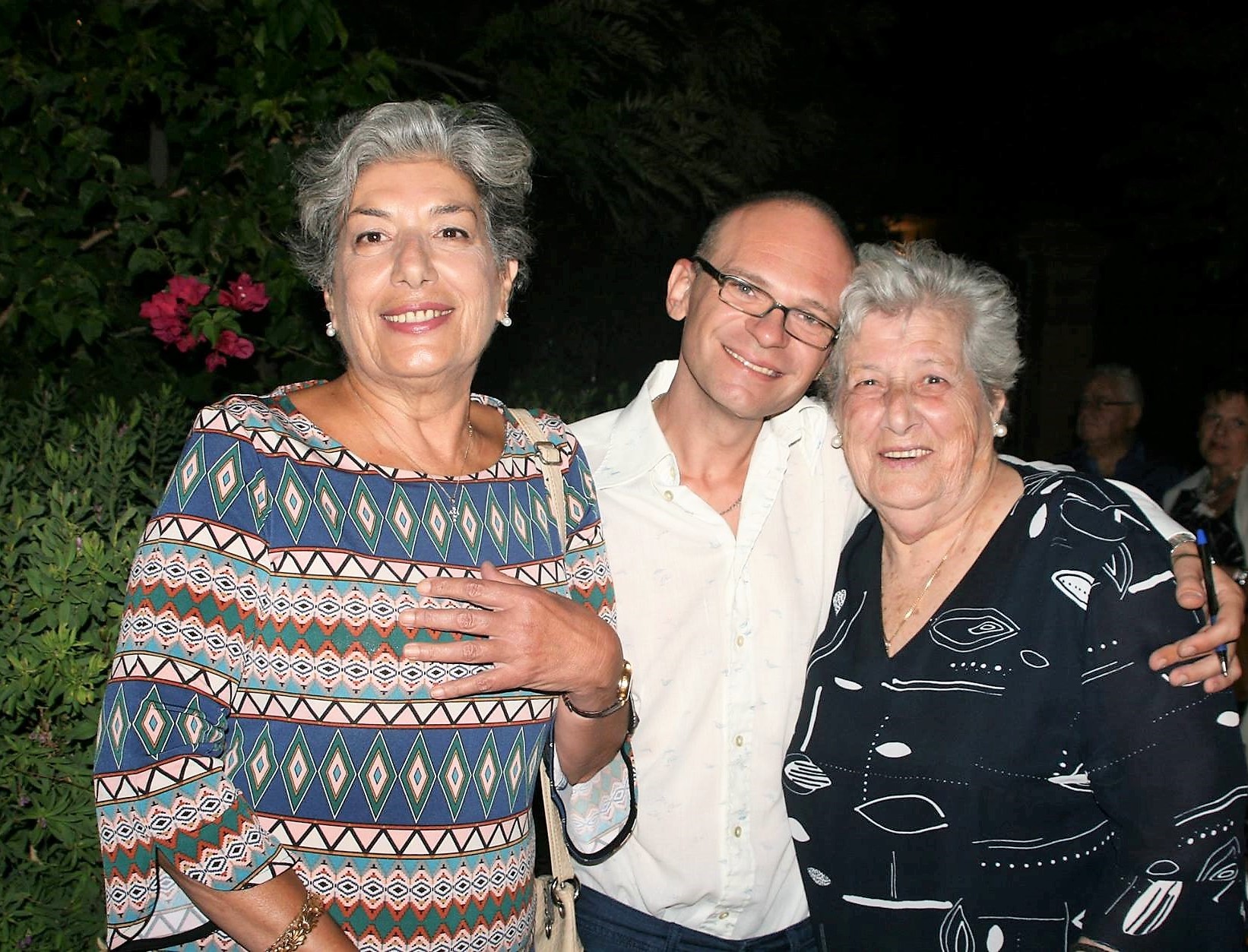
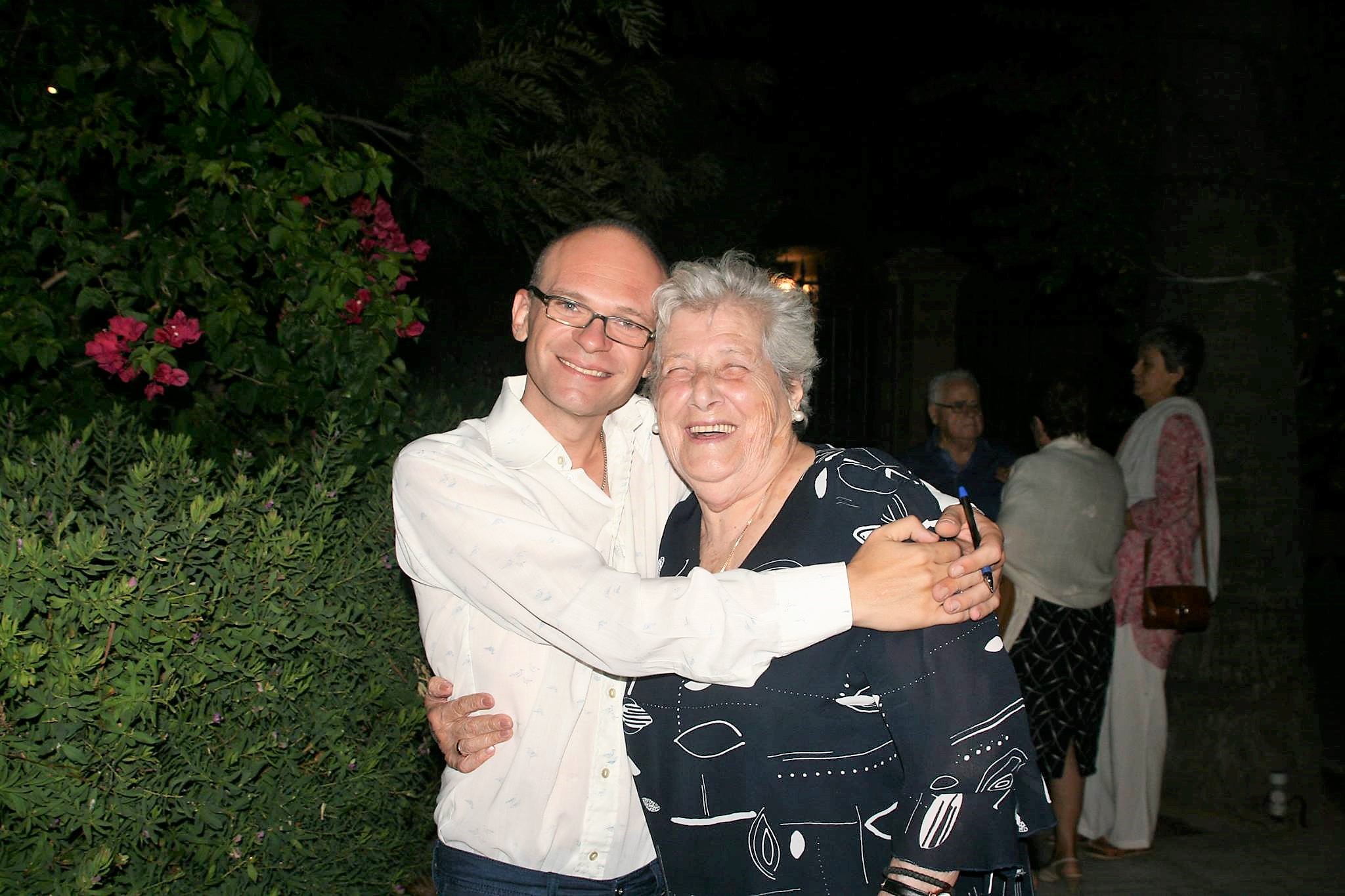
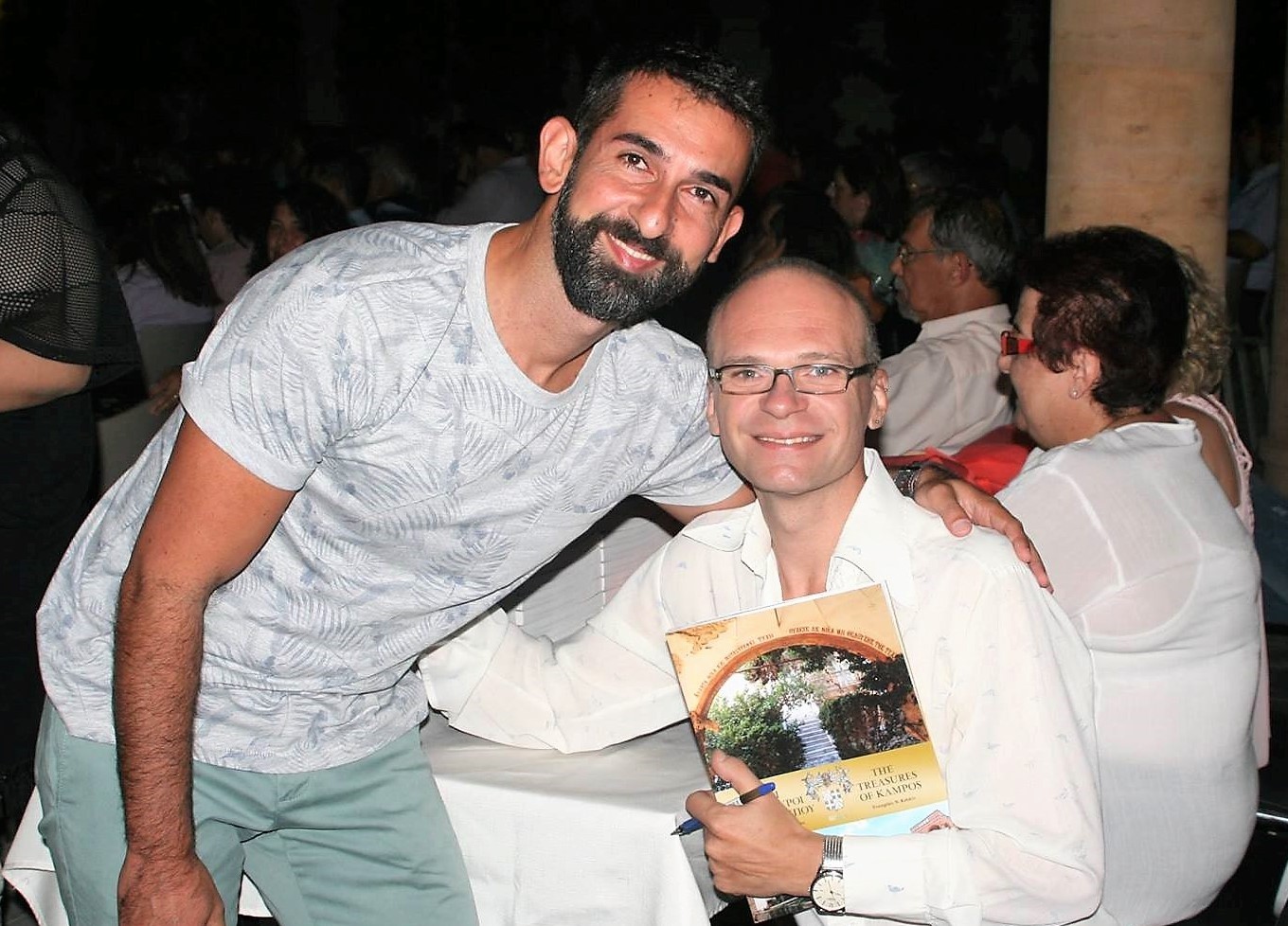
The presentation of the book ‘The Treasures of Kampos’, which took place on August 25, 2017, at the Maria Tsakos Foundation, in the city of Chios.
Book Making
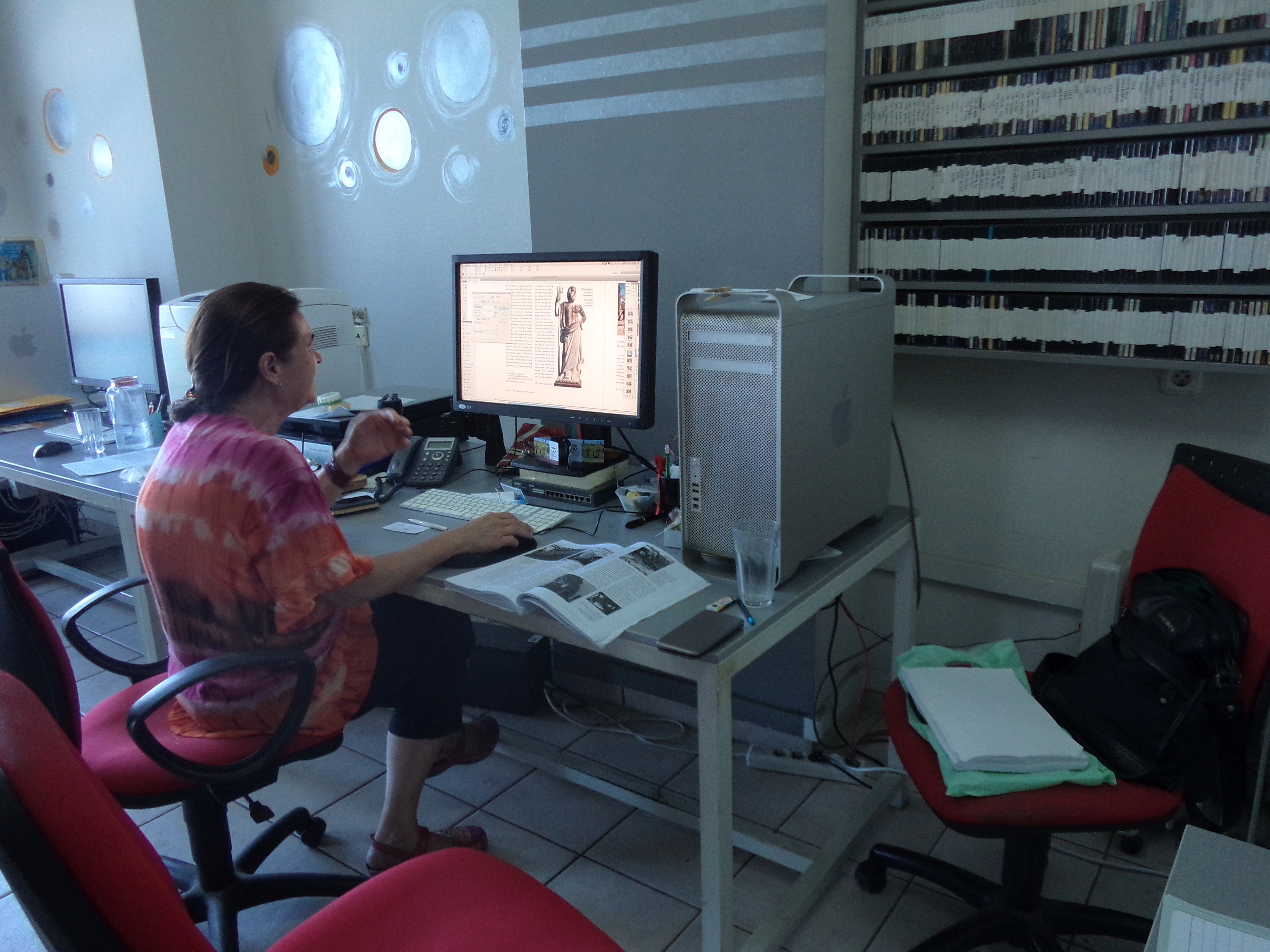
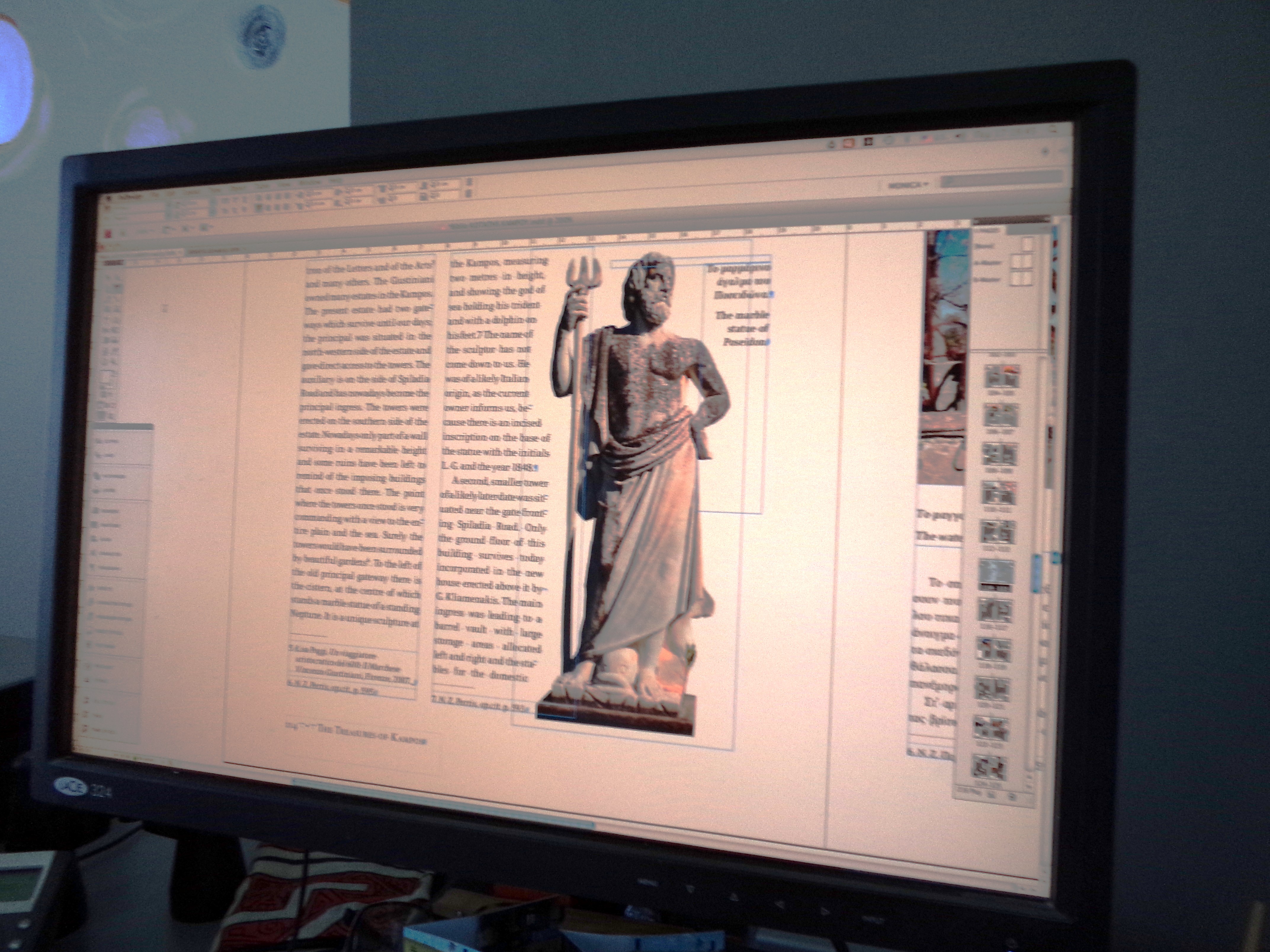
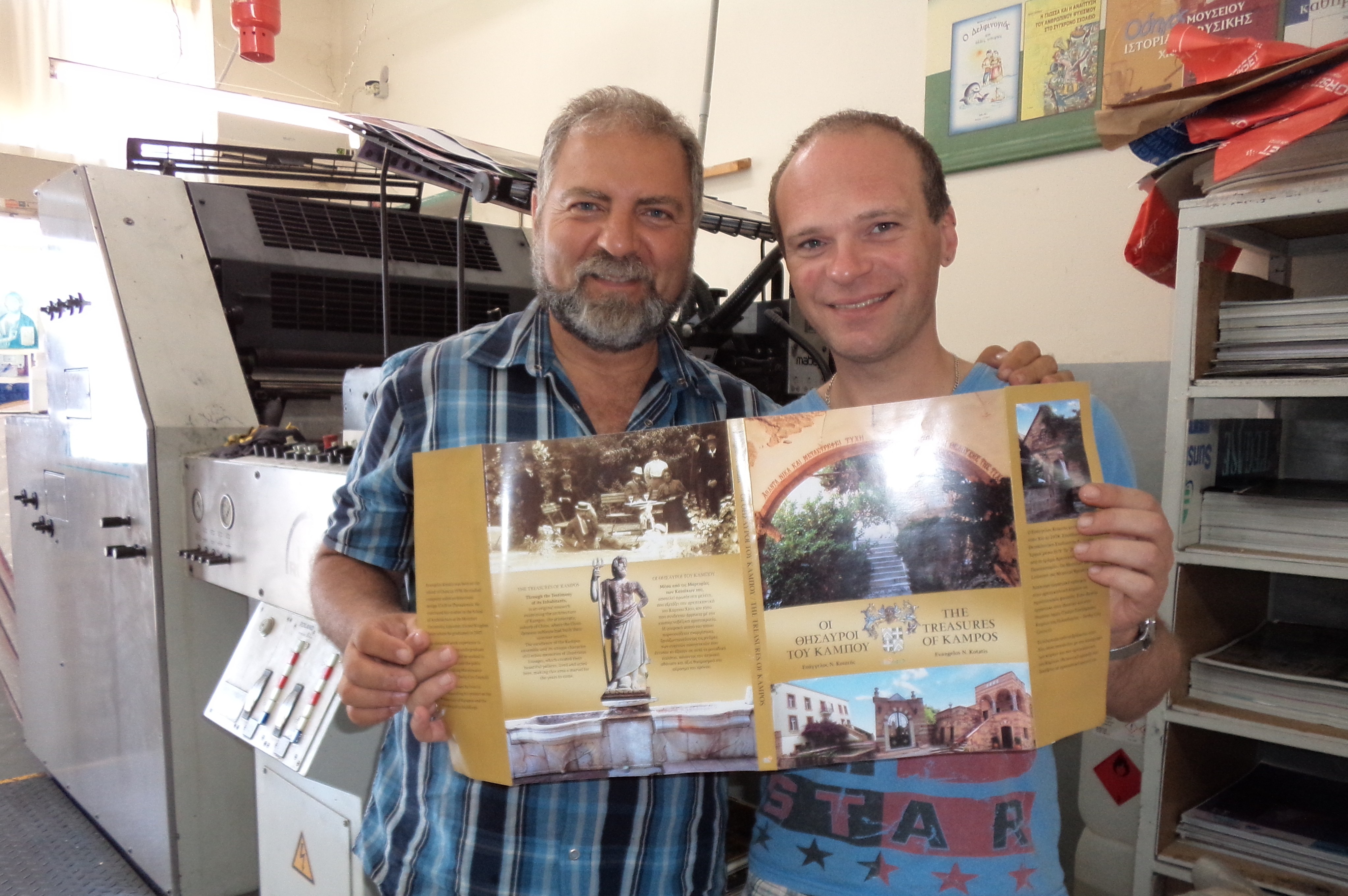
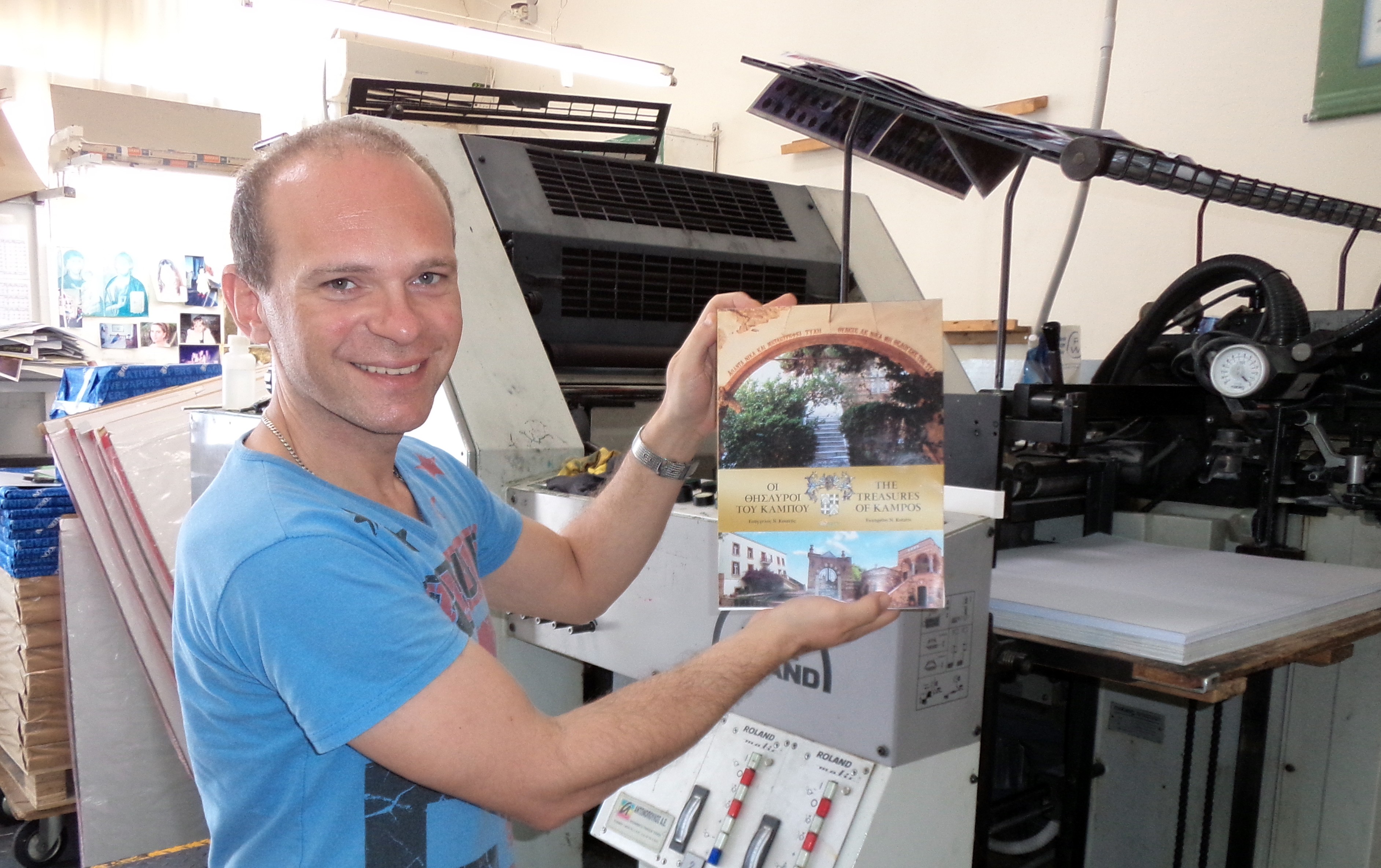
The bookmaking and production process took place at the facilities of Alpha Pi Publishing House. The project was carried out in close collaboration with Giannis N. Palios in Chios, as well as with Monika Kovarik, the book’s graphic designer. Monika worked meticulously on each individual page, which she would send to me for editing. After reviewing and refining the material, I would return it to her, and we would continue developing the pages together.
During this period, I was living in Australia for one year (2015-2016), and our collaboration was conducted entirely remotely. After my return to Chios, the collaboration with Giannis N. Palios and Monika Kovarik continued in person at the publishing house’s facilities, beside the printing press, during the book’s printing process.
From the Desertion to the Book
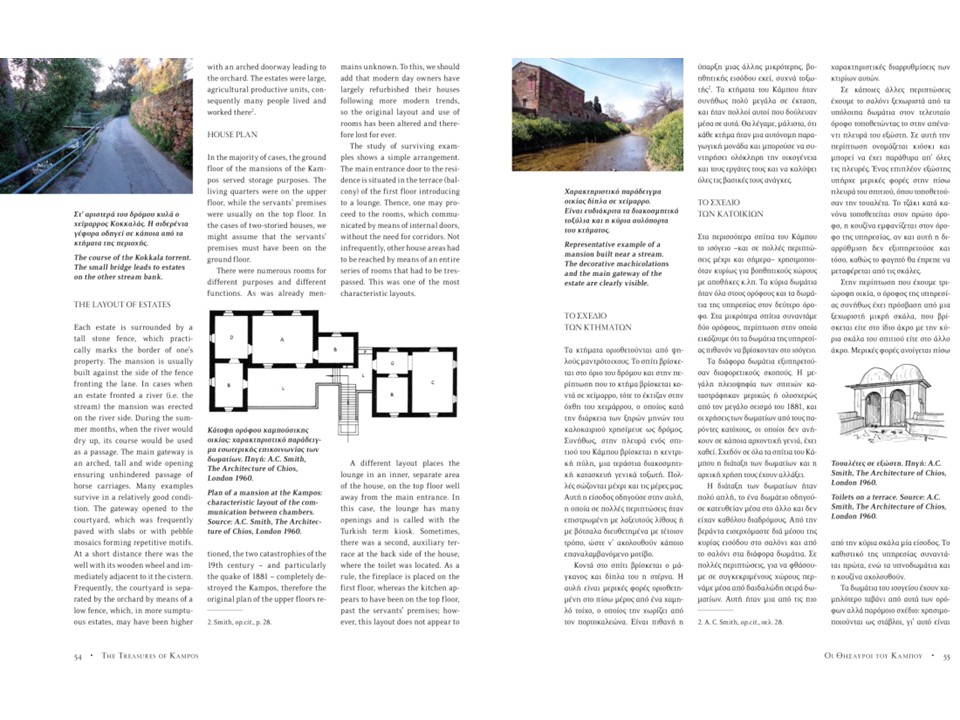
My research focuses on the life and work of the architects Dimitrios Pikionis and Arnold C. Smith, who worked independently yet toward a common goal: the documentation of the architectural fabric of Chios. This endeavor was funded by the Chian intellectual and great benefactor Philip P. Argenti, who early on recognized the importance of recording the island’s local architectural heritage. Pikionis began his study in 1929, while the work was continued by Smith in 1936 and completed in 1939, leaving behind a significant legacy for future architectural research.
In 1962, following Smith’s death, the book “The Architecture of Chios” was published in London. In 2000, after Pikionis’s death, the album “The Architecture of Chios” was published, presenting his drawings and notes.
My academic and research journey began during 2004–2005, with the completion of my undergraduate dissertation at De Montfort University of Leicester (UK), entitled:
“The domestic architecture of Chios as seen through the eyes of Dimitrios Pikionis and Arnold C. Smith – Main emphasis on the Kampos region.”
A copy of this dissertation has been deposited in the Korais Library.
The choice of this subject was far from accidental. I grew up in Kampos, as from an early age I frequently visited my cousins’ estates there, due to my mother’s family origins. My father was a building contractor and was repeatedly involved in the construction, repair, and restoration of buildings in the Kampos of Chios. From a young age, I was present at construction sites, in courtyards and mansions, observing how a building is erected, how it deteriorates, and how it can be preserved. At the same time, I attended schools in Kampos, which further strengthened my experiential bond with the place.
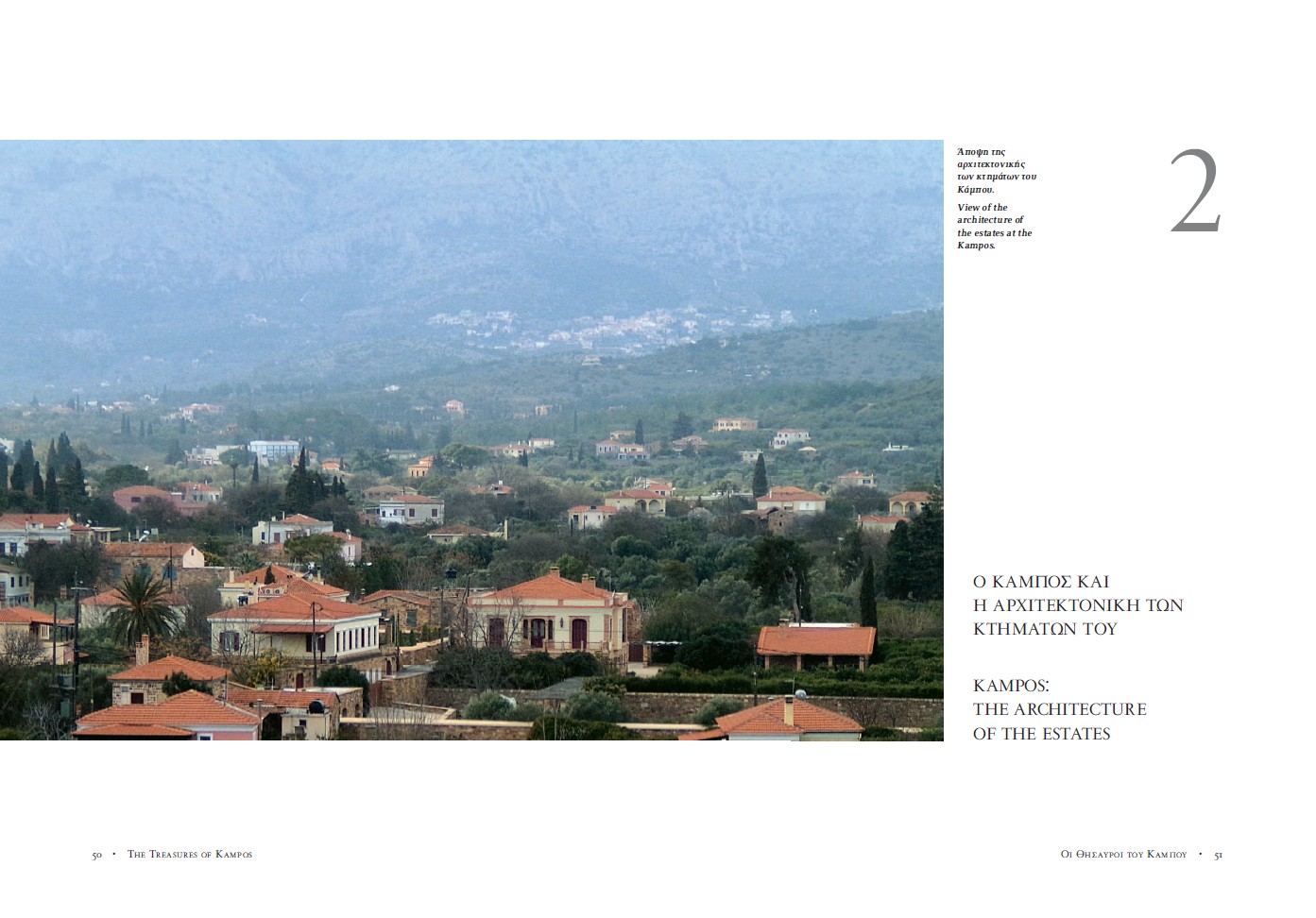
The distinctive architecture of Kampos—the mansions of prominent families, the courtyards, the enclosing walls, and the traces of a bygone era—constituted my first substantial spatial experience and motivated me to study architecture, not merely to document but also to safeguard the architectural heritage of this unique place.
In 2017, this vision took tangible form with the publication of my book “The Treasures of Kampos”, released by the Chian publishing house Alpha Pi / Giannis Palios, with sponsorship from my dear friend and Australian-based member of the Greek diaspora Panagiotis Ch. Gambranis. This work represents a continuous study from 2004 to the present, which is ongoing and aims toward the publication of a second, expanded edition.
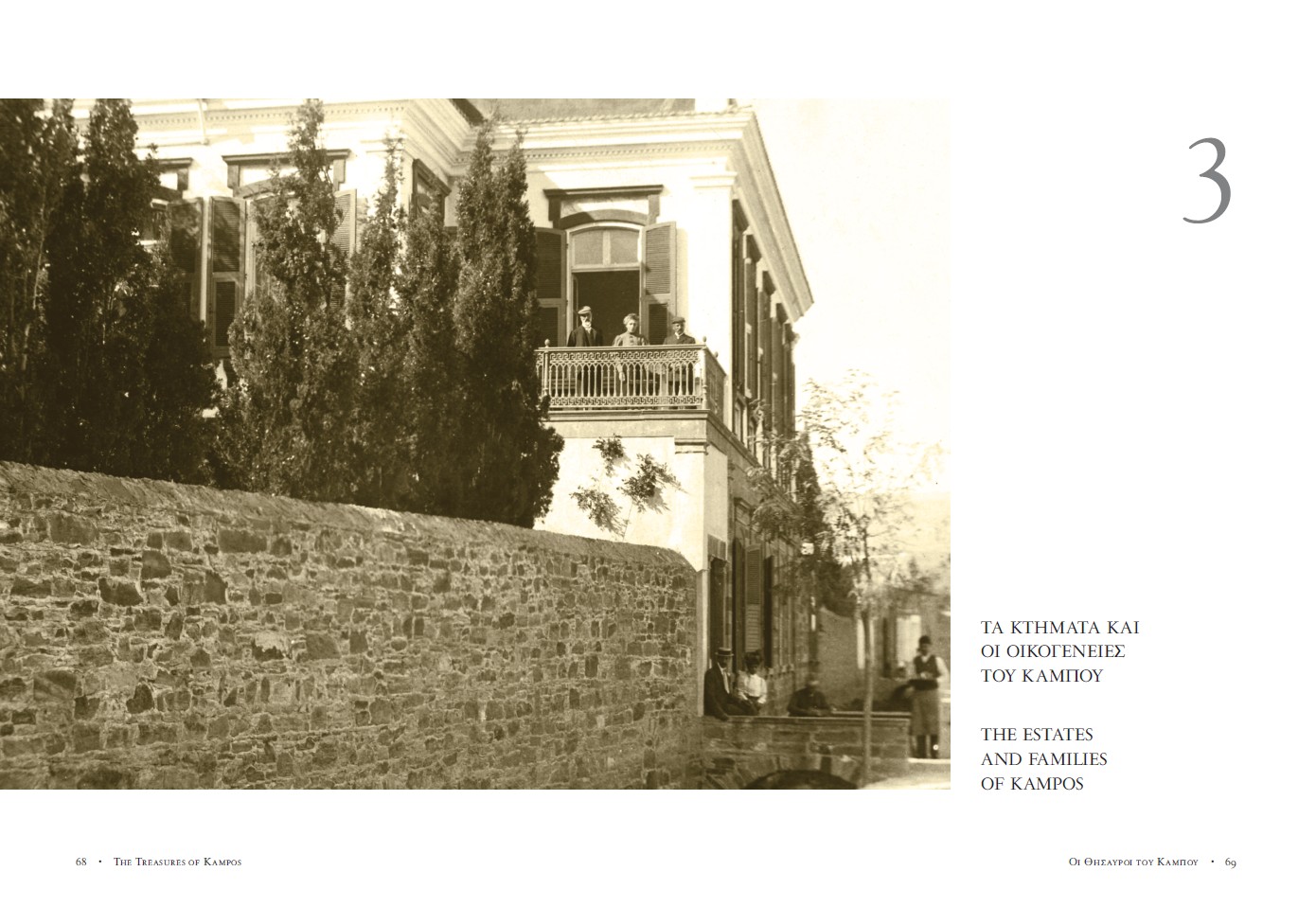
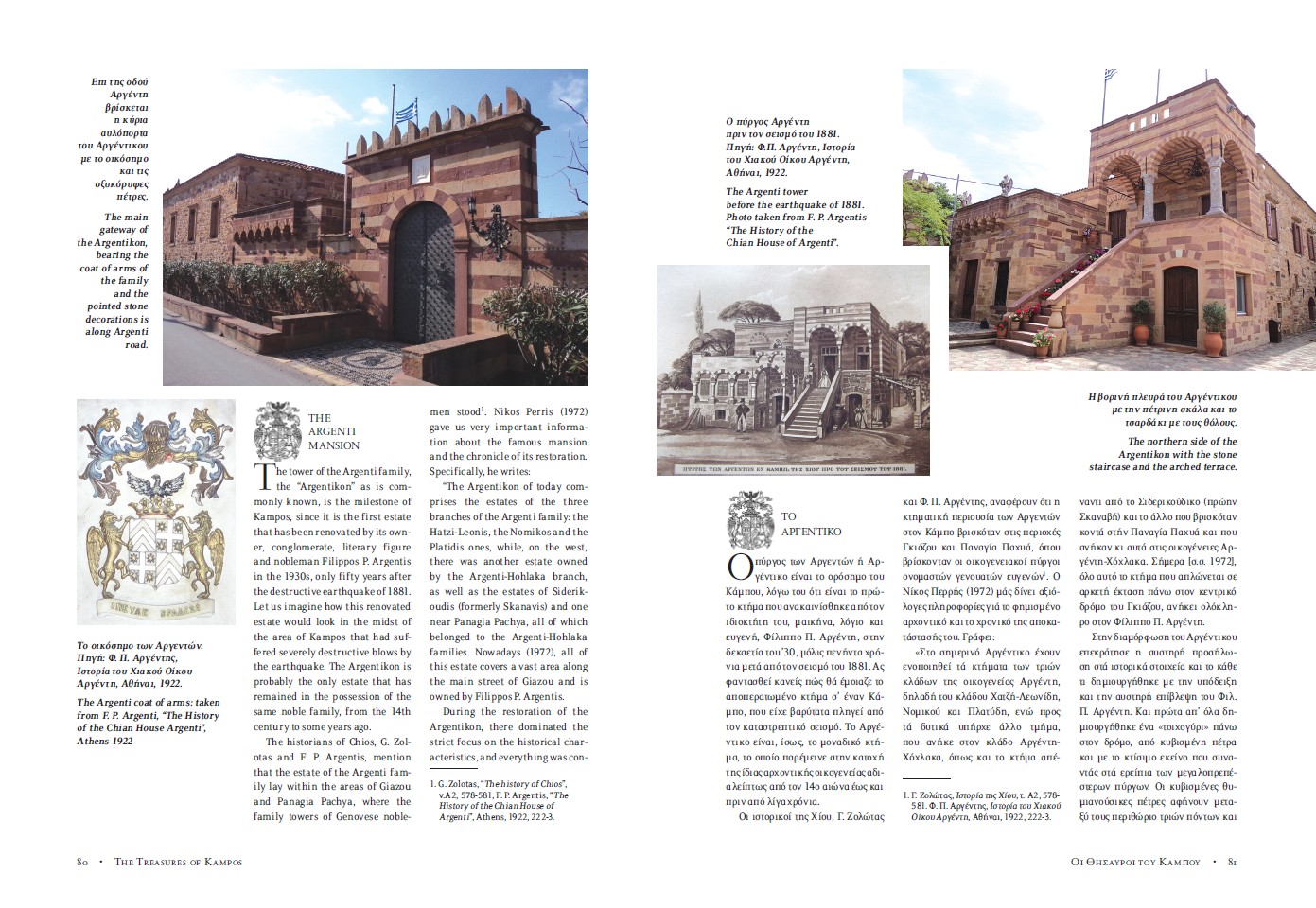
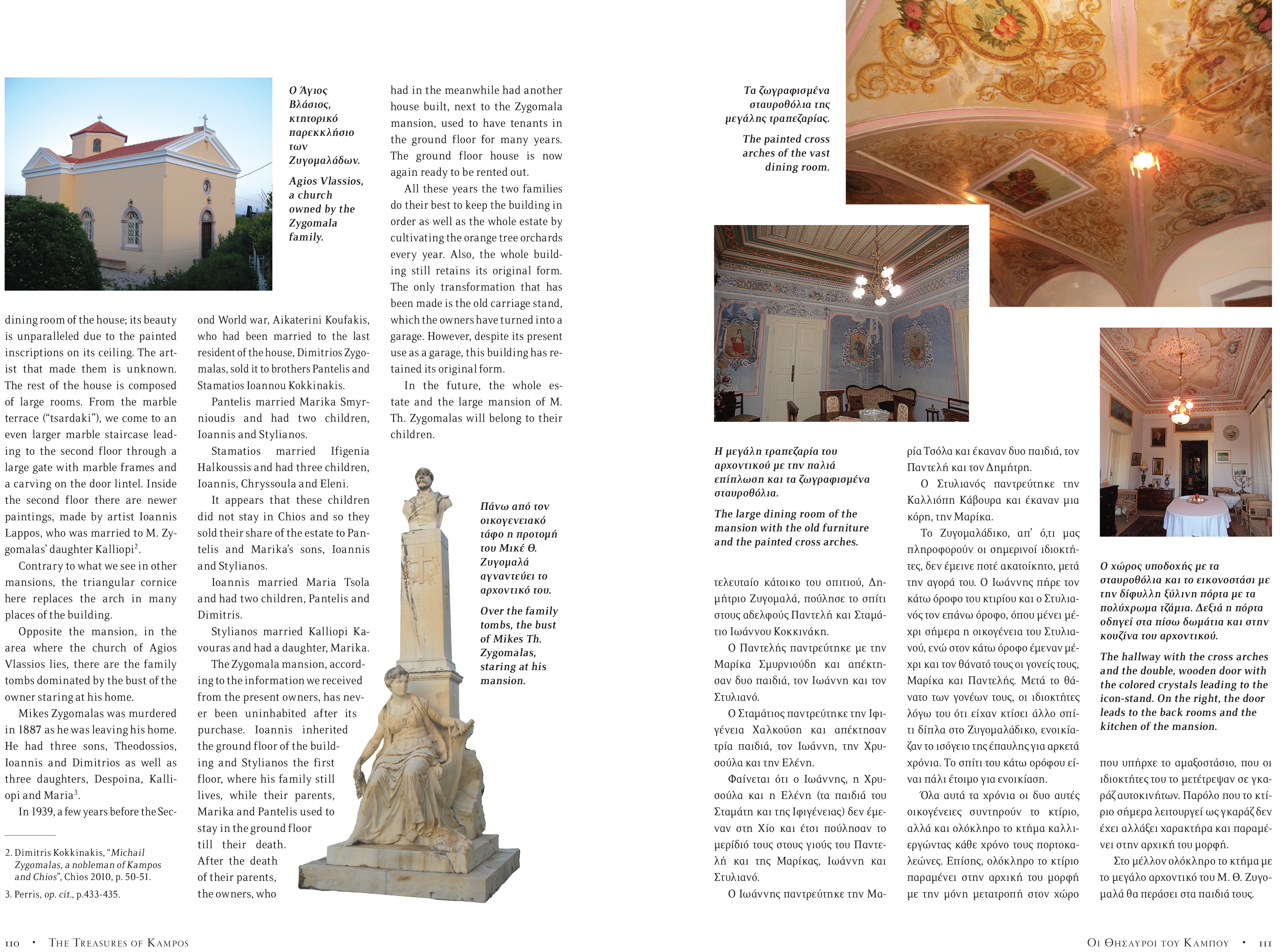
The purpose of this approach and of the present study is to contribute meaningfully to the understanding and promotion of the remarkable architectural and historical heritage of the Kampos of Chios, and more broadly, of our homeland. The Genoese presence on the island after 1346, and in particular the activity of the Giustiniani through the Maona, decisively shaped the architectural, economic, and social landscape of Chios. Mansions, towers, watchtowers, rural complexes, the castle, and the harbor were organized in a way that linked production, trade, and defense, creating a unique ensemble that survives to this day as a living testimony of history and culture.
At the same time, this research seeks to bridge architecture with history and with the people who created it. Kampos is not merely a collection of buildings; it is the families who shaped it and left their imprint on time. Families such as the Giustiniani, Argenti, Petrokokkinos, Rodokanakis, Rallis, and other significant lineages, which from the Byzantine era to the present distinguished themselves as merchants, entrepreneurs, military leaders, administrators, intellectuals, historians, cultivators, benefactors, and scientists. Their activity extended far beyond the boundaries of Chios, leaving traces in Greece, Syros, Athens, London, Alexandria, the West, and the East, contributing to the economy, the arts, literature, and the sciences.
The ultimate goal of this effort is to raise awareness among both present and future generations. From an early age, children should become familiar with what exists around them—who lived and created in this place, and what buildings have been handed down to us. Through knowledge arises respect, protection, and appreciation of our cultural heritage. The Kampos of Chios constitutes a unique cultural reservoir, a living connection between people and places, which deserves to be preserved, promoted, and passed on intact to future generations, so that its history remains alive and intelligible—from Chios to the wider world.

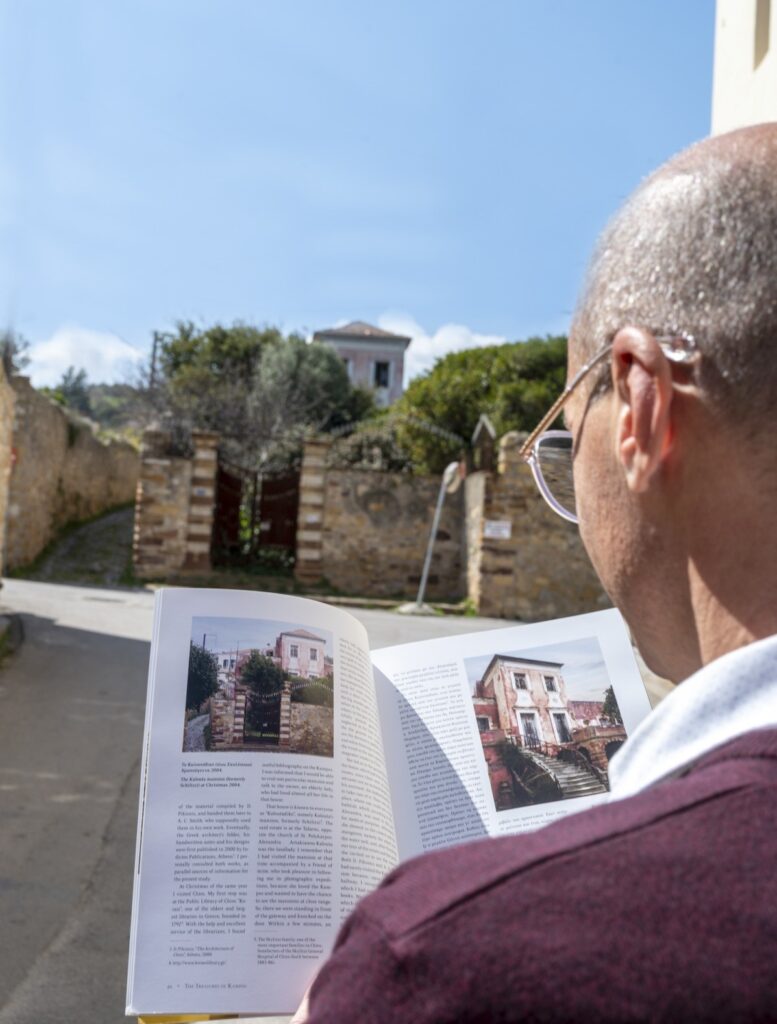
The Kaloutas Mansion (formerly the Schilizzis Mansion) in Kampos, Chios, was the first house I visited in 2004, as part of my dissertation at De Montfort University in Leicester. From that very moment, a personal journey began — a continuous, voluntary study deeply rooted in my childhood memories of this land of nobility, history, and memory.
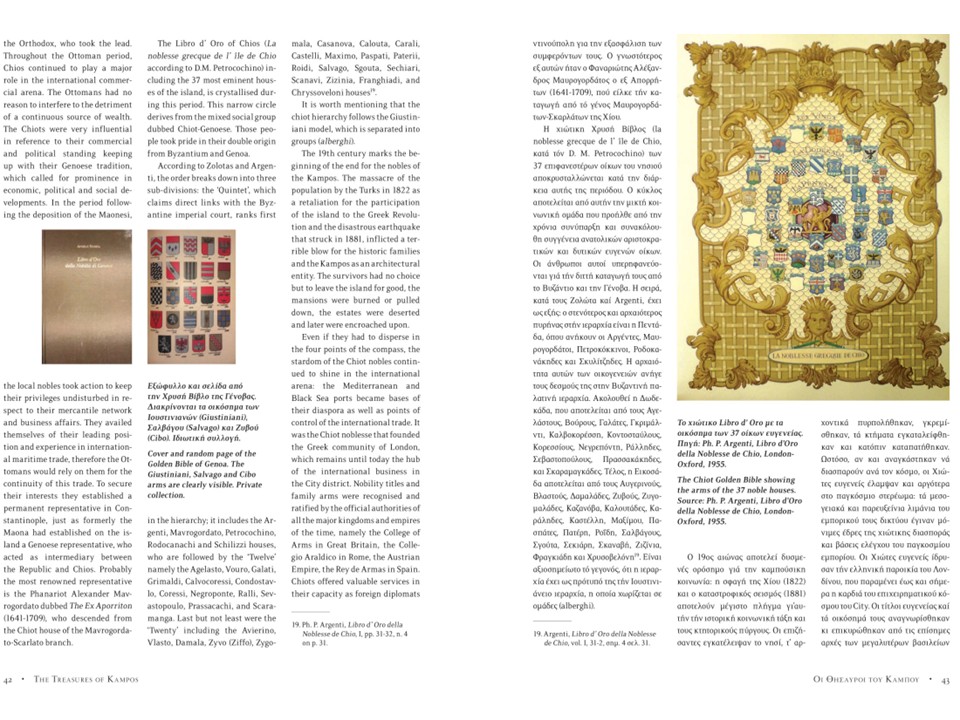
Kampos was once the cradle of 37 distinguished families — the nobles of Chios, as recorded in Philip P. Argenti ‘’Libro d’Oro de la Noblesse de Chio’’ — their coats of arms engraved in both stone and time. Since then, with devotion and passion, I have sought to trace and record their legacy in every corner of the world.
My dream took form in 2017 with the publication of ‘’The Treasures of Kampos’’ — a true labor of love, my spiritual child, dedicated to a place that continues to inspire me.